Radios in Canada
A two-level museum exhibition tracing how radio entered Canadian homes — and how it brought people together. Spanning four eras from the 1920s through the early 1960s, the exhibition uses colour-coded zones, larger-than-life interactive radios, and immersive period rooms to give visitors a hands-on sense of radio's role in Canadian life.
- Context
- Exhibition Design course, Carleton University — based on the Musée des ondes Émile Berliner collection
- Scope
- Floor planning, interactives, graphics, materials, lighting
- Key Features
- Colour-coded era zones, larger-than-life interactive radios, immersive period rooms, two-level floor plan
The Project
The Space
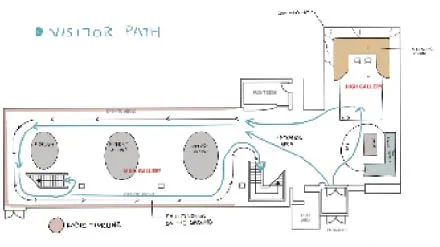
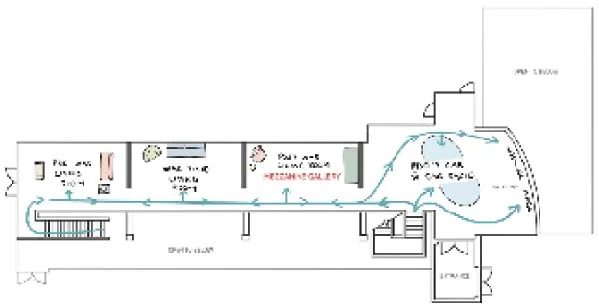
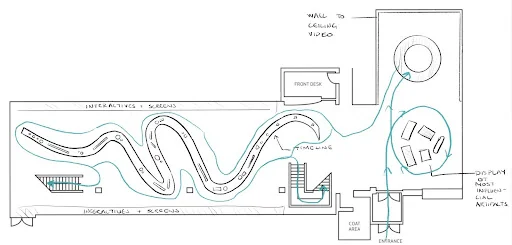
The Carleton Art Gallery is a two-level exhibition space on the Carleton University campus — and the space we were designing for. The main gallery is a long, open floor with high ceilings and a mezzanine running above one side. The mezzanine gallery is a narrower upper level that overlooks the main floor below, with a separate balcony area at one end. Together, the two floors gave us distinct zones to work with — the main gallery for the exhibition's primary timeline experience, and the mezzanine for the period rooms and final interactives.
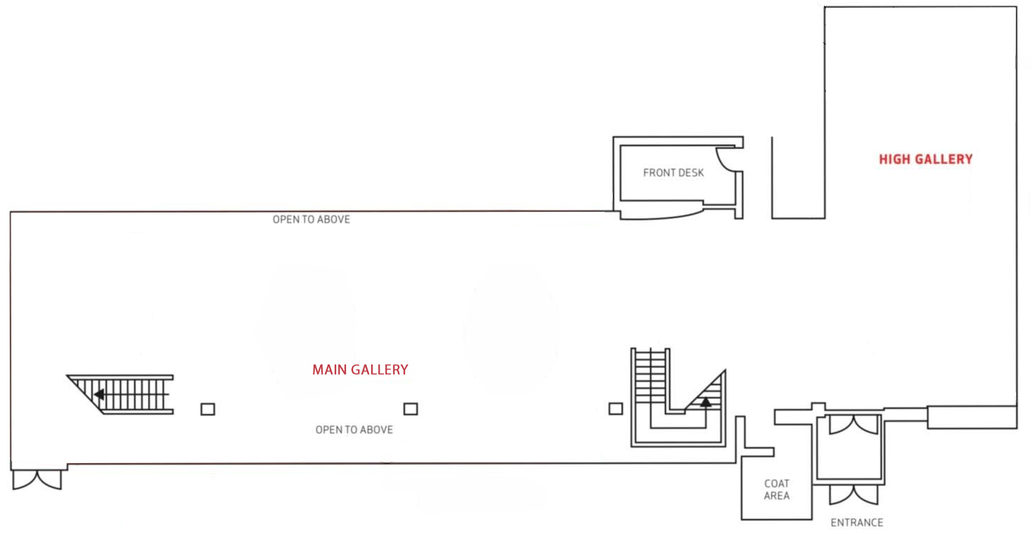
Floorplan — Level 1
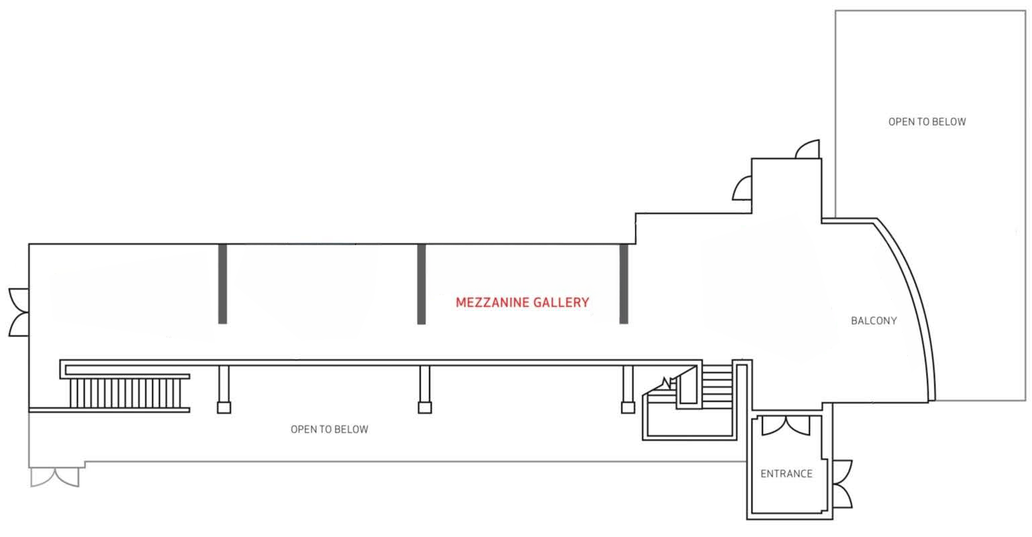
Floorplan — Level 2
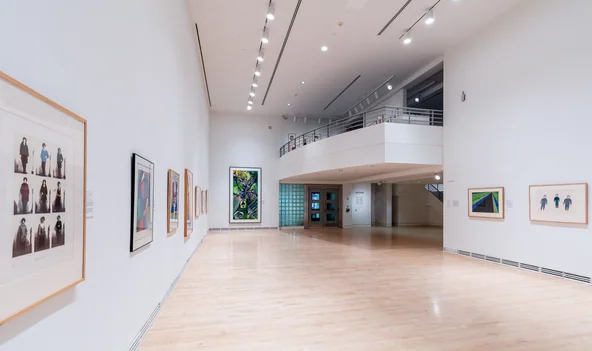 High Gallery
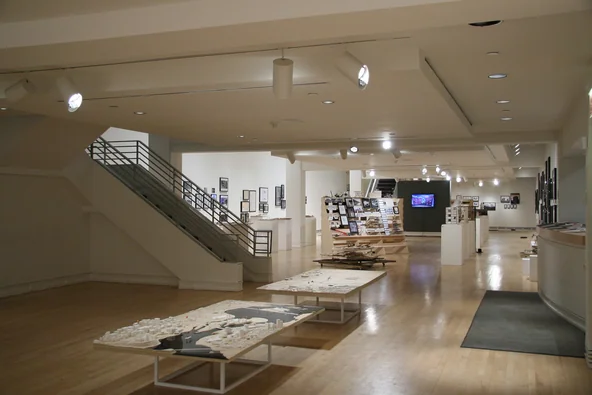 Main Gallery
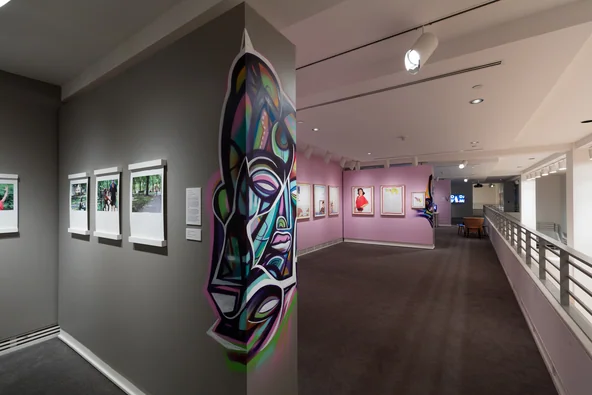 Mezzanine Gallery
The Source Material
The project brief asked us to choose a community story from Digital Museums Canada — a federal program that funds digital exhibitions drawn from collections across the country. The digital exhibition we selected was Radio at Home in Canada, which gave us both the artifacts and the historical framing that our physical exhibition was built around.
Chosen Artifacts
Radios
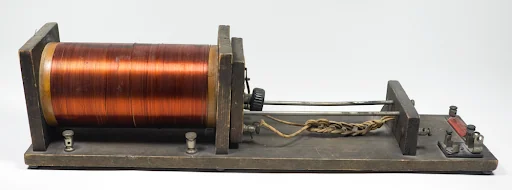
Radio Galène Loose Coupler, c. 1920
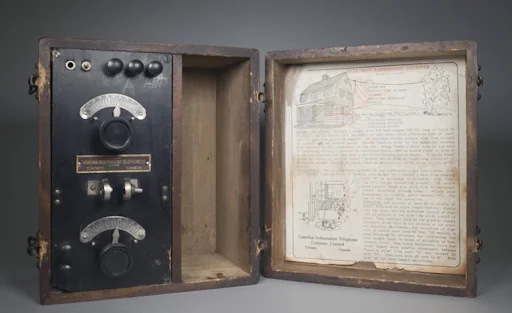
Everyman Radiophone, c. 1921
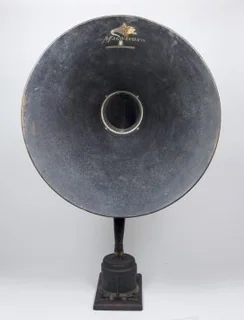
Magnavox Loudspeaker, 1922
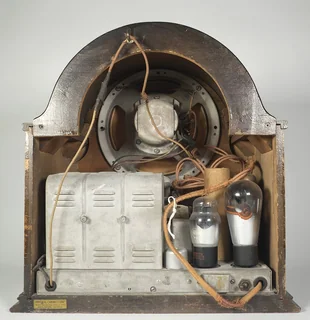
DeForest-Corsley Elgin, 1931
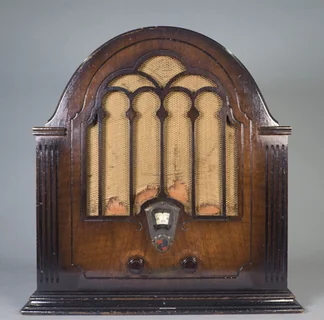
Cathedral Radio, c. 1932
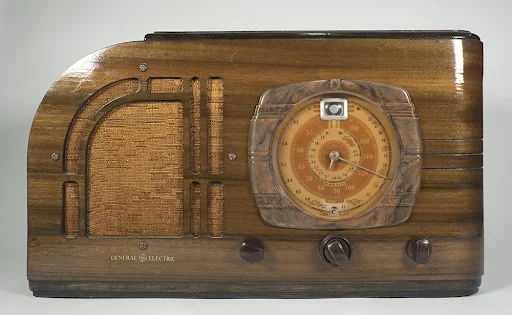
Sparton 051, c. 1932
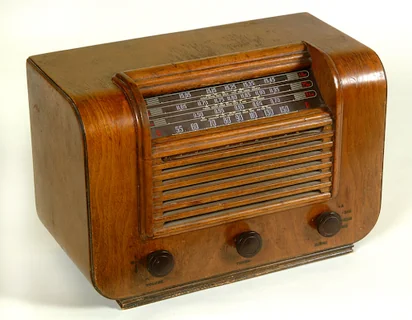
Tabletop Radio, c. 1930s
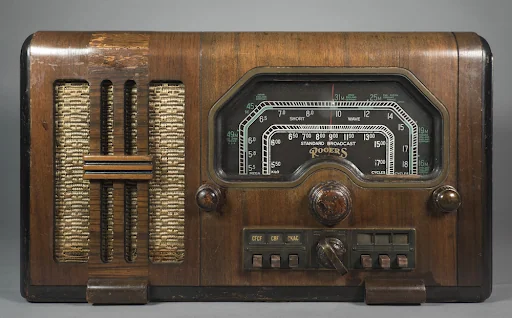
RCA Victor Globetrotter P6-1, 1935
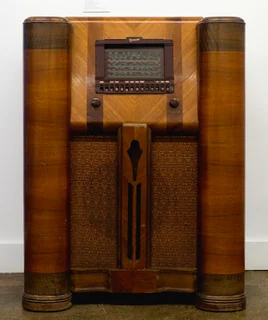
Marconi Model 85, c. 1936
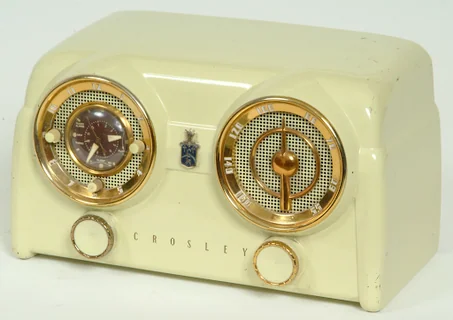
Crosley D-25, 1940
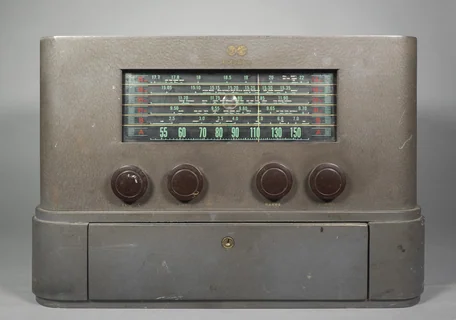
SRE Type 457, 1942
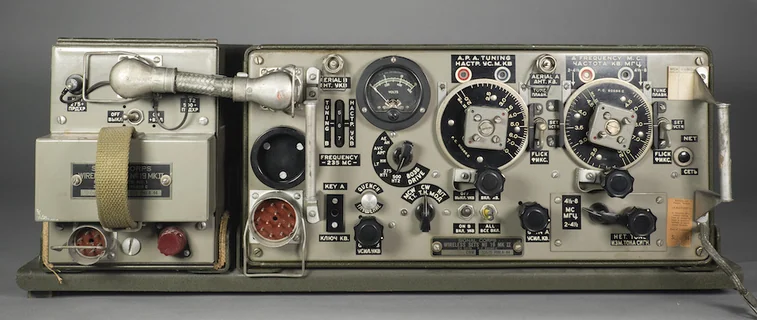
Signal Corps Military Radio, 1944
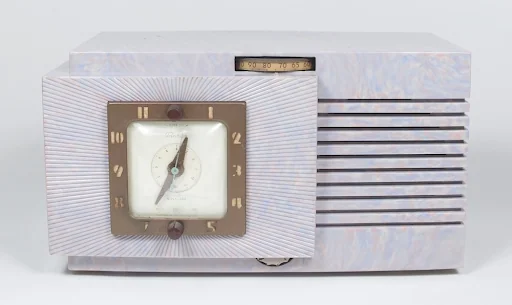
Clock Radio, c. 1950
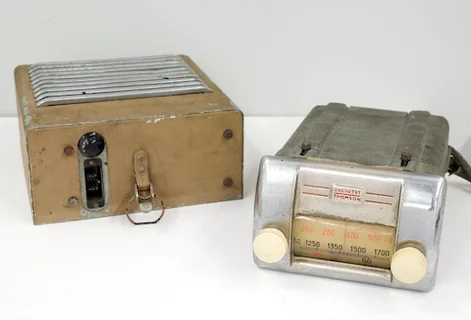
Ducretet-Thompson Car Radio, 1951
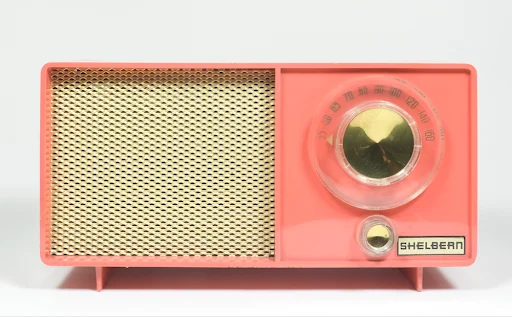
Shelbern 55, 1955
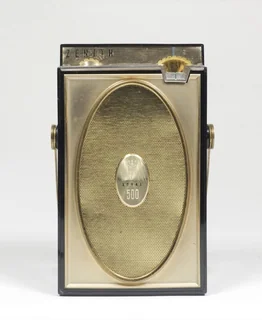
Zenith Royal 500, 1956
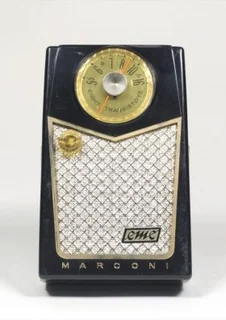
Marconi CMC 488, 1957
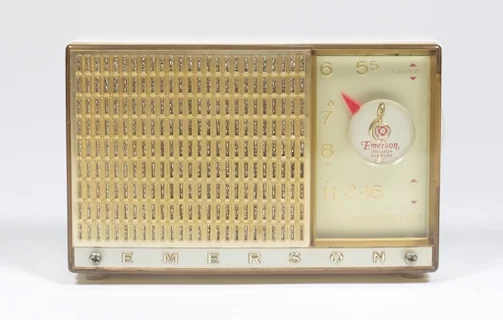
Emerson 555V, 1959
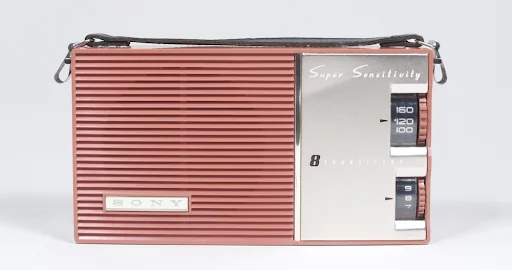
Sony TR-84, 1959
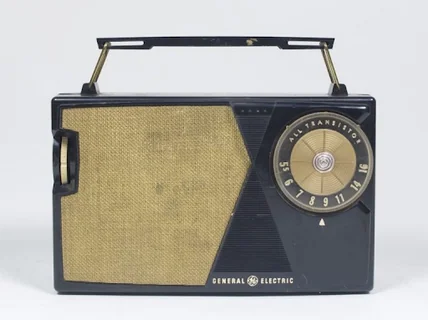
GE P807J, 1961
Print & Advertising
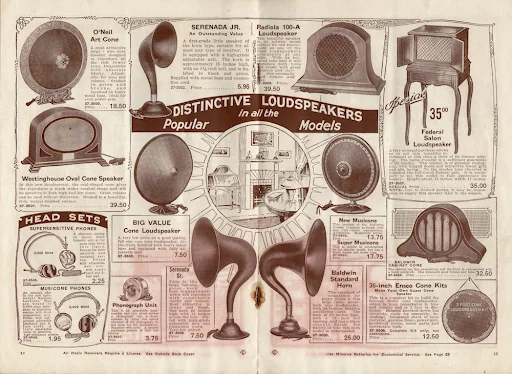
Loudspeaker Catalogue, 1920s
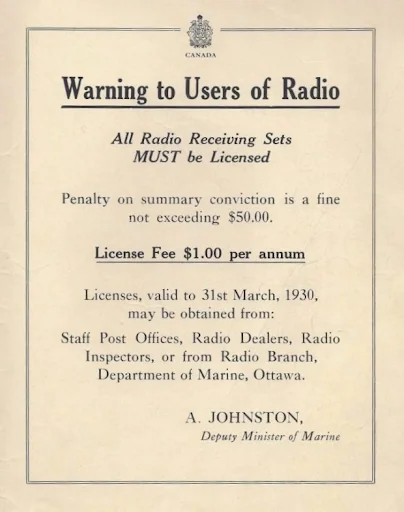
Warning to Users of Radio, c. 1930
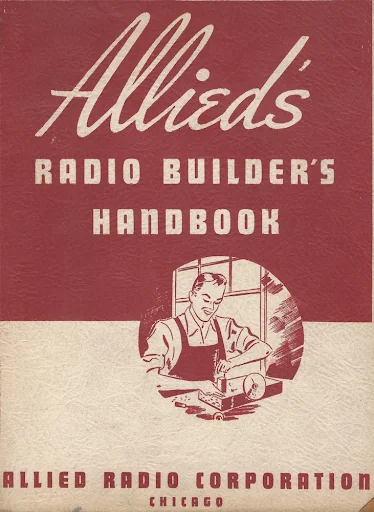
Allied's Radio Builder's Handbook, 1941
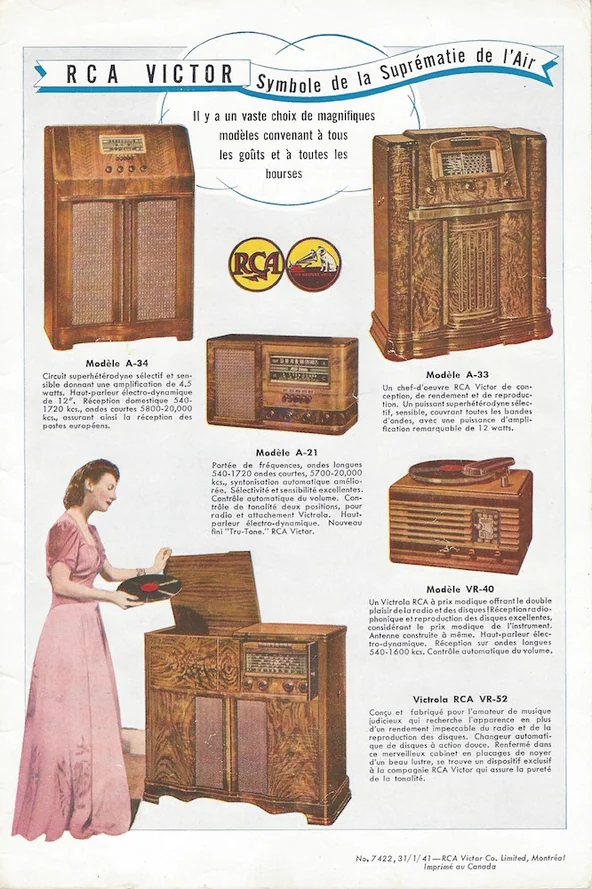
RCA Victor Advertisement, 1941
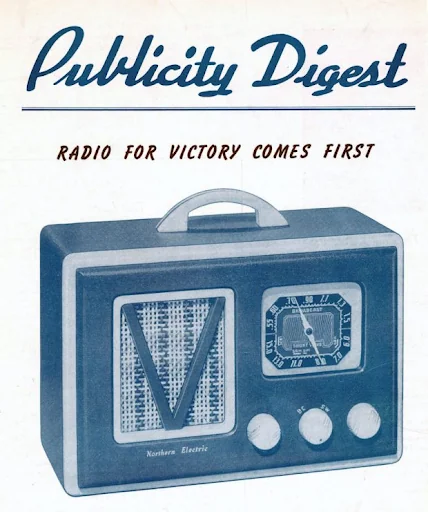
Publicity Digest — Radio for Victory, WWII
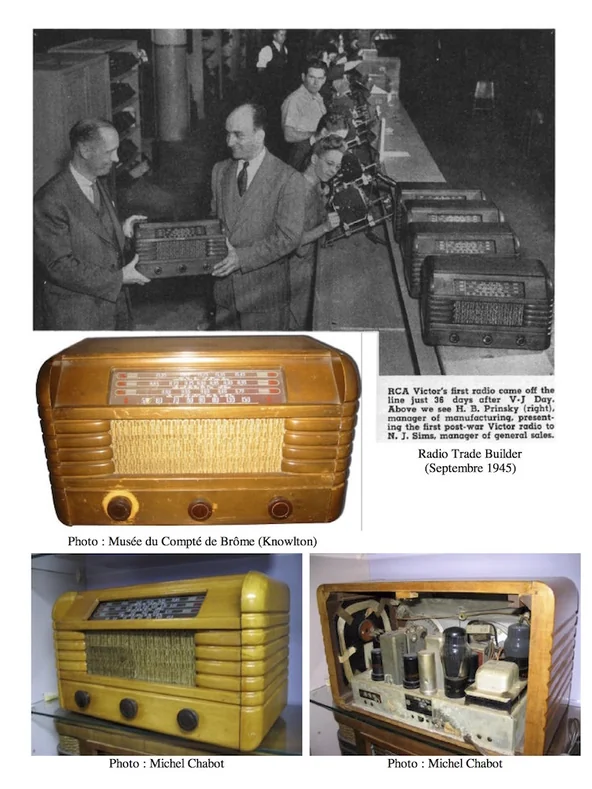
Radiophilie Québec — RCA Victor M-45
The Brief
The Big Idea
Since the introduction of radios in Canada, Canadians have accepted them into their homes wholeheartedly, connecting people on a level in which they couldn't before.
Radio didn't just bring sound into Canadian homes — it connected rural and urban Canadians, provided a lifeline during wartime, and became a centrepiece of everyday domestic life. The exhibition tells this story through four colour-coded eras, each with its own atmosphere and interactive centrepiece.
Storytelling Through Four Eras

The Crystal Era
1920 – 1930
Radios During the War
1939 – 1945
Radios Post War
1950 – 1960
Radios on the Move
1959 – 1961
Visitors

Primary
The Explorer
Curious visitors with little prior knowledge who want an immersive, hands-on experience. They are drawn to interactives, willing to try a challenge, and leave wanting to know more.

Secondary
The Facilitator
Parents and caregivers bringing children. They value interactives that are accessible and fun for multiple ages — and may be reminded of a radio culture they themselves grew up with.
Initial Concepts
Three distinct directions were developed and presented for critique — each interpreting the Radios in Canada material through a different visual lens. They vary in tone, typographic character, and spatial atmosphere, while all working within the same two-level gallery footprint.
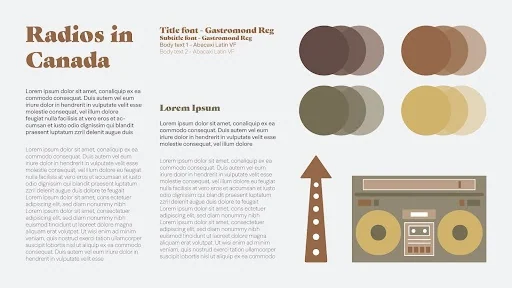
Warm & Grounded
An earthy, nostalgic direction rooted in terracotta, warm browns, and muted olive. Vintage serif typography gives the exhibition a tactile, human quality — evoking the domestic intimacy of radio as a household object.
Visual Identity
Floor Plans
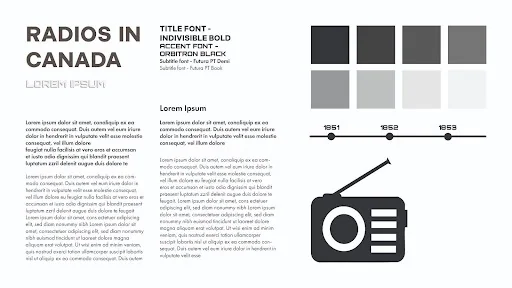
Clean & Minimal
A stark, modern direction built entirely in black, white, and grey. Bold geometric type creates strong visual hierarchy. The restraint draws attention to the artifacts themselves rather than the surrounding environment.
Visual Identity
Floor Plans
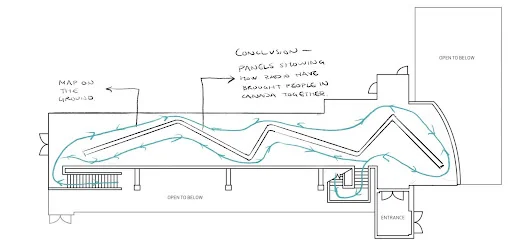
Bold & Playful
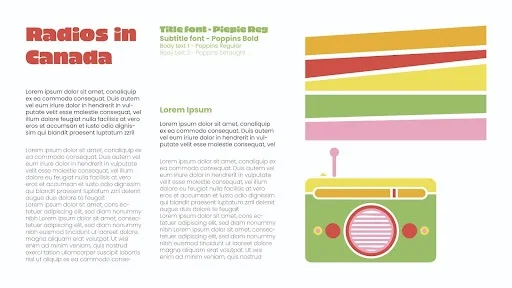
A high-energy direction using bright primary colours — red, green, yellow, pink — with rounded Poppins type. The palette references the graphic character of mid-century radio design and gives the space an inviting, accessible energy.
Visual Identity
Floor Plans
Final Design Overview
Spatial Overview
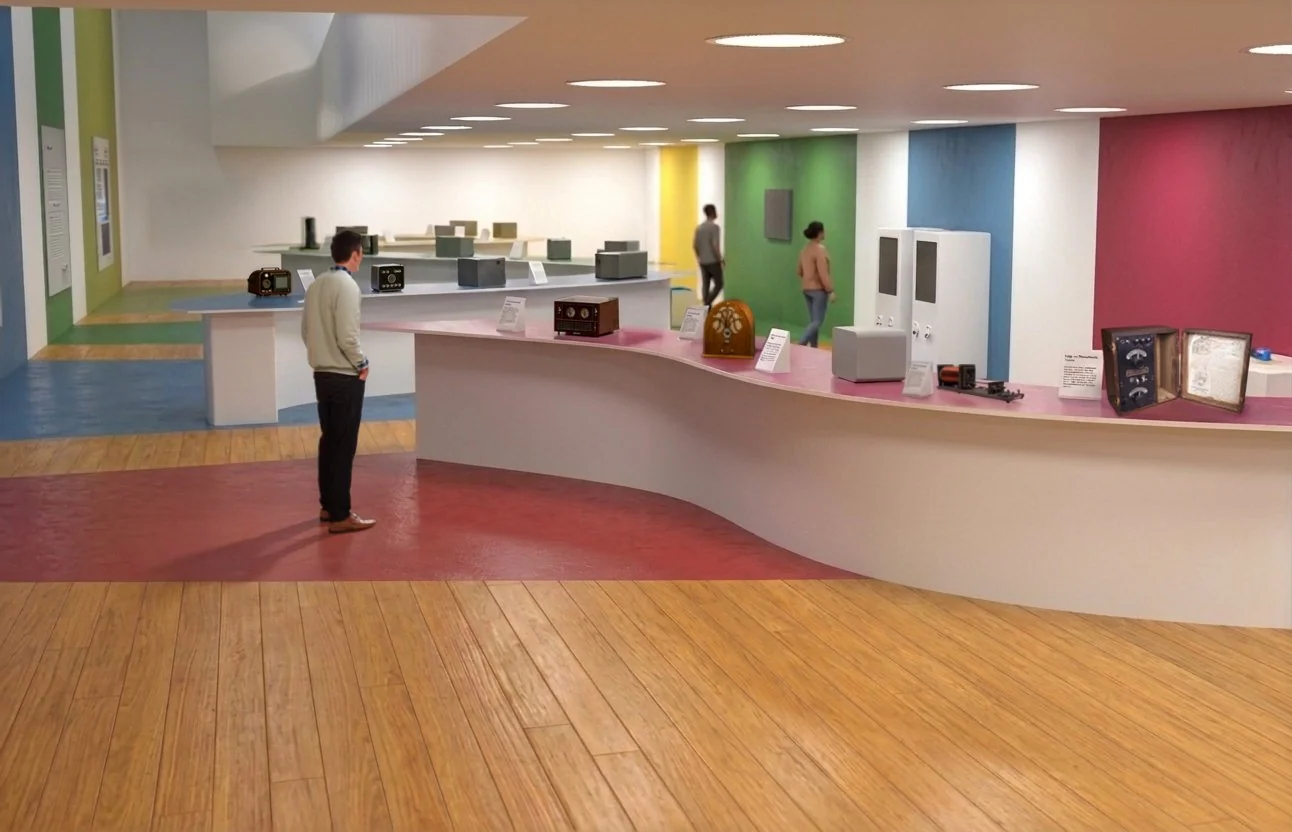
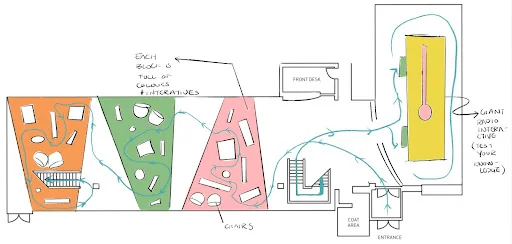
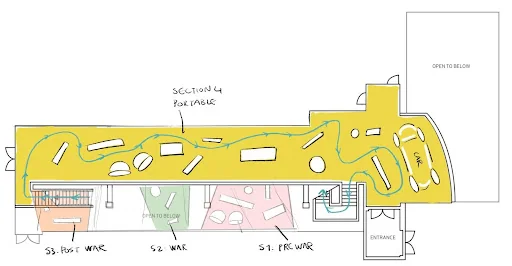
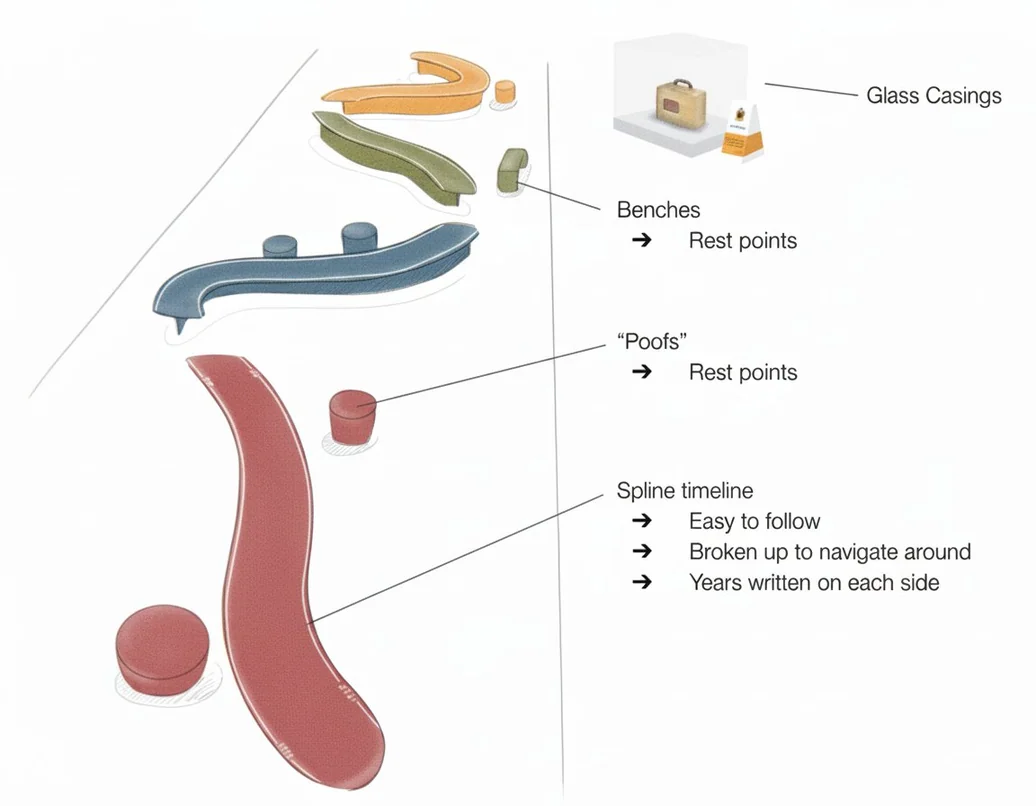
The main gallery on the ground floor holds four colour-coded era zones, each with an interactive centrepiece and a spline timeline winding through the space. The mezzanine above holds four period living rooms — one per era — plus a final recording-booth interactive and a high-gallery viewing area looking down onto the main floor.
Main gallery — colour-coded zones, spline timeline, and interactive stations
Level Two — Period Rooms
Upstairs, each era has its own living room furnished with period-appropriate furniture, wallpaper, and a radio from the collection — giving visitors a sense of what it actually felt like to have a radio in the home during that decade.
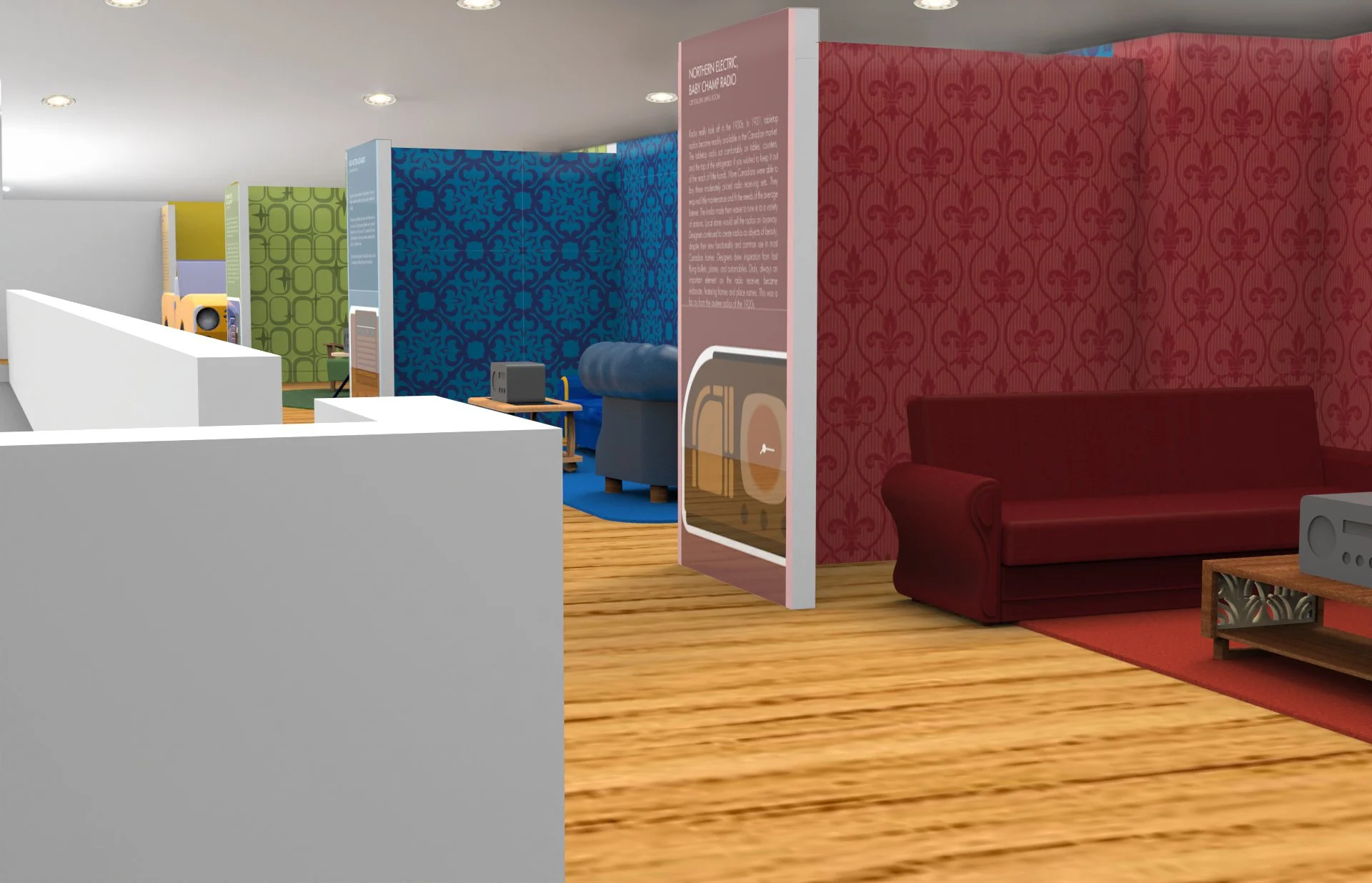
Level Two walkthrough — period rooms overview
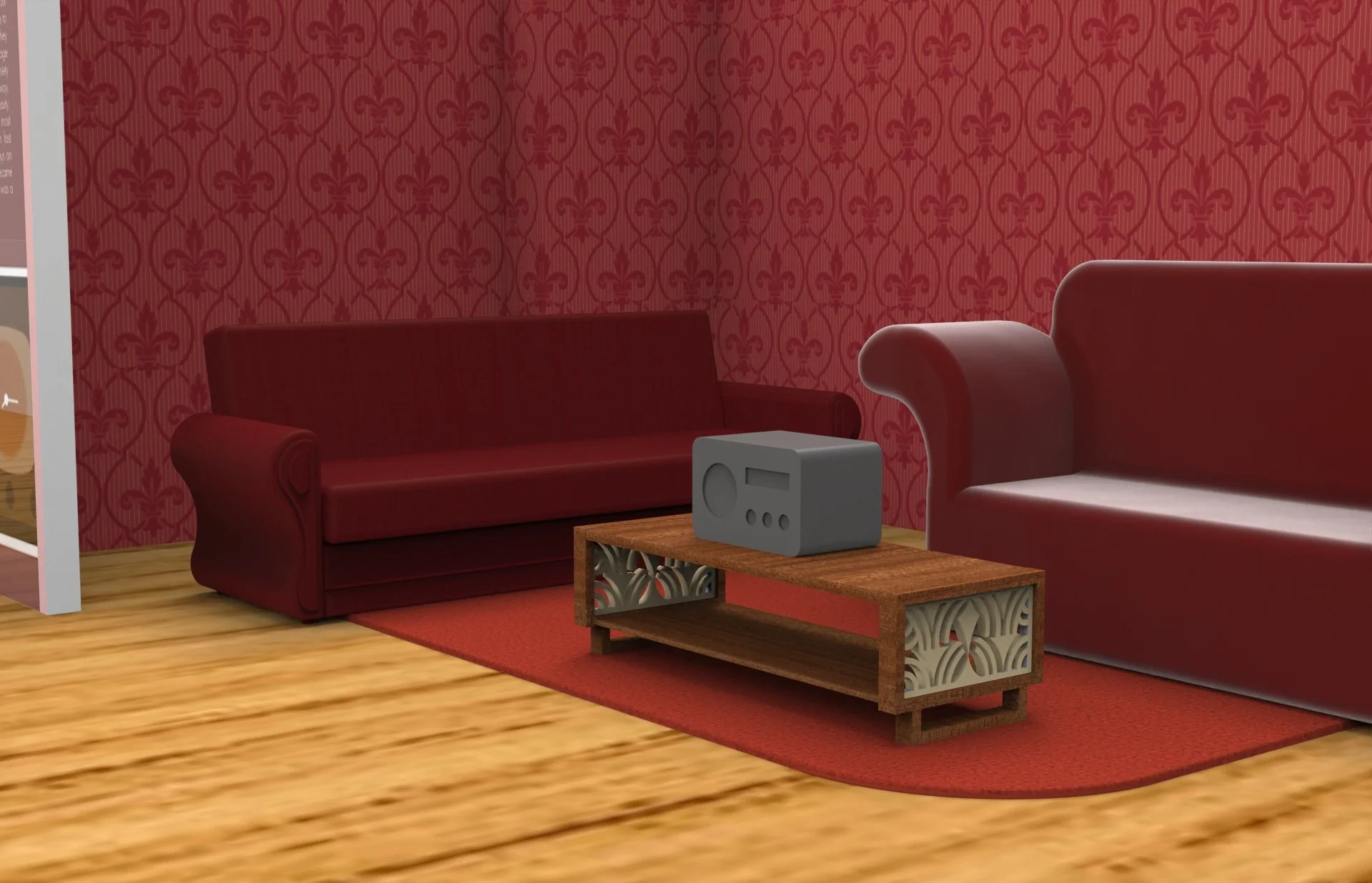
Red era period room rendering
Floor Plans
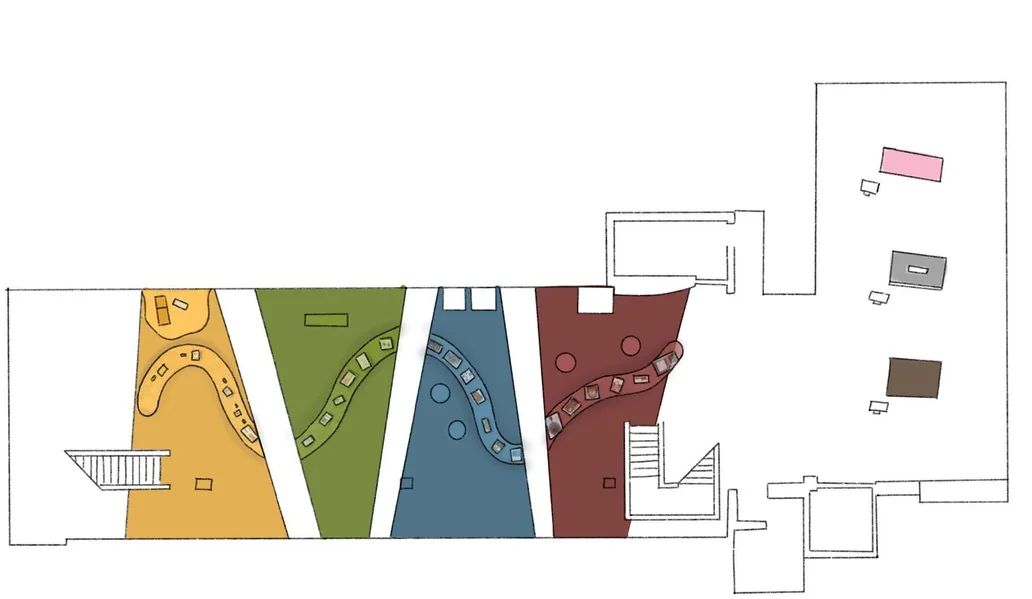
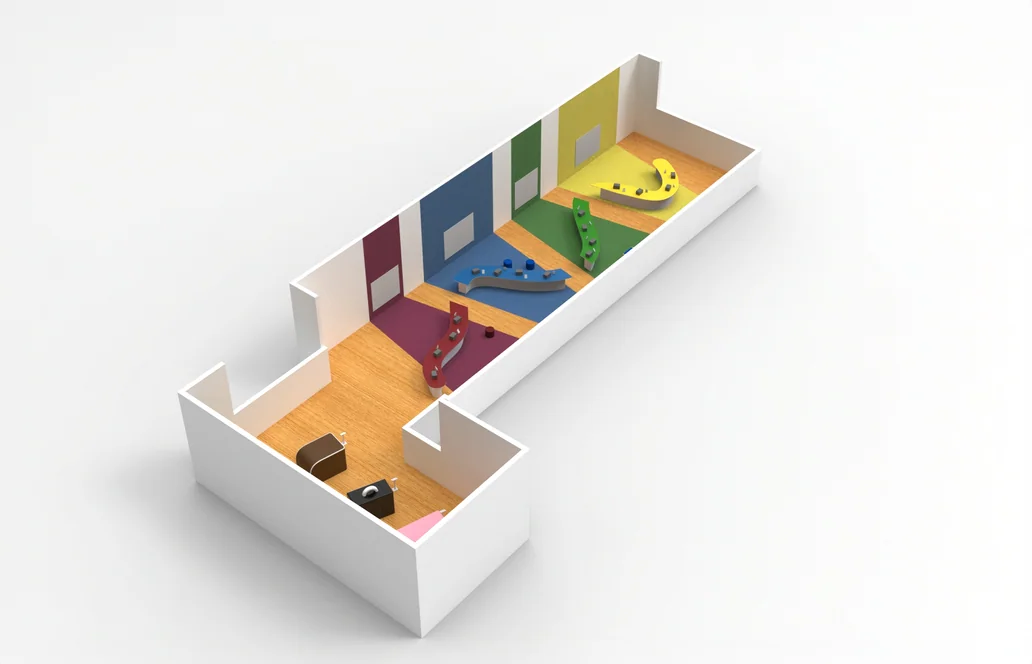
Level 1 — floor plan and overall render
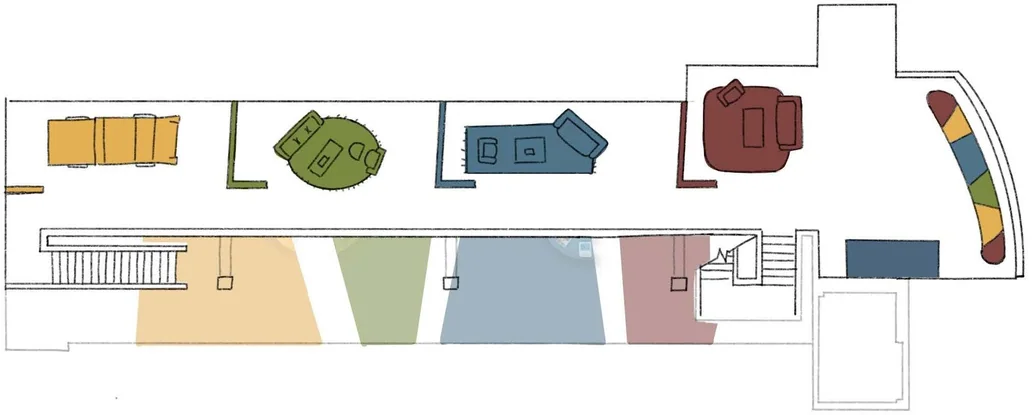
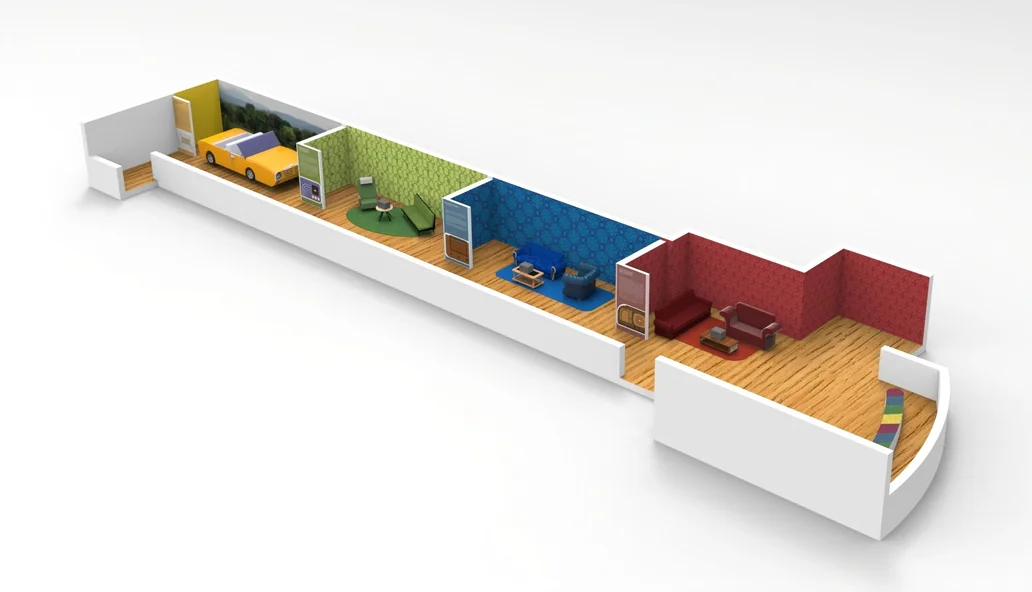
Level 2 — floor plan and rendering
Physical Model
A scale model of the full two-level exhibition was built to explore the spatial relationships between the era zones, period rooms, and circulation paths.
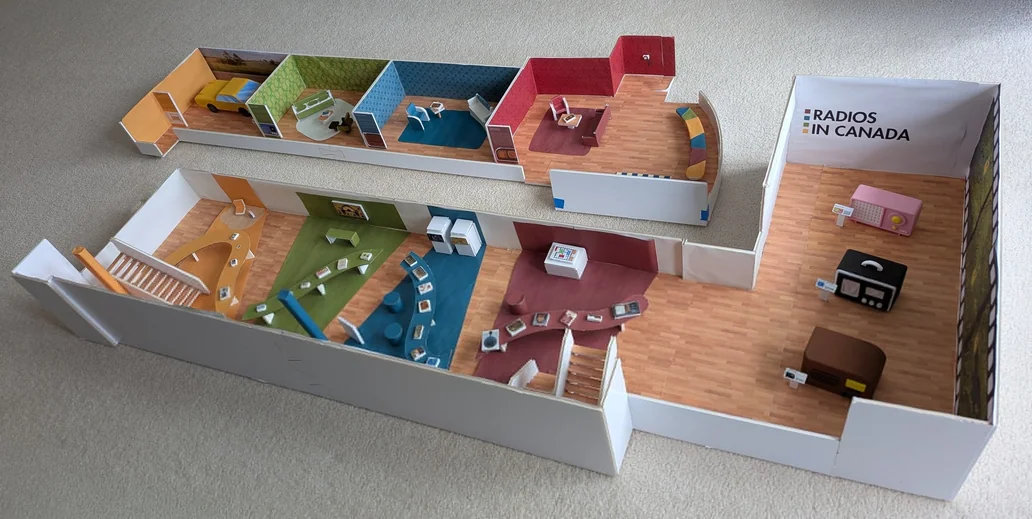
Both floors of the finished model, viewed from above
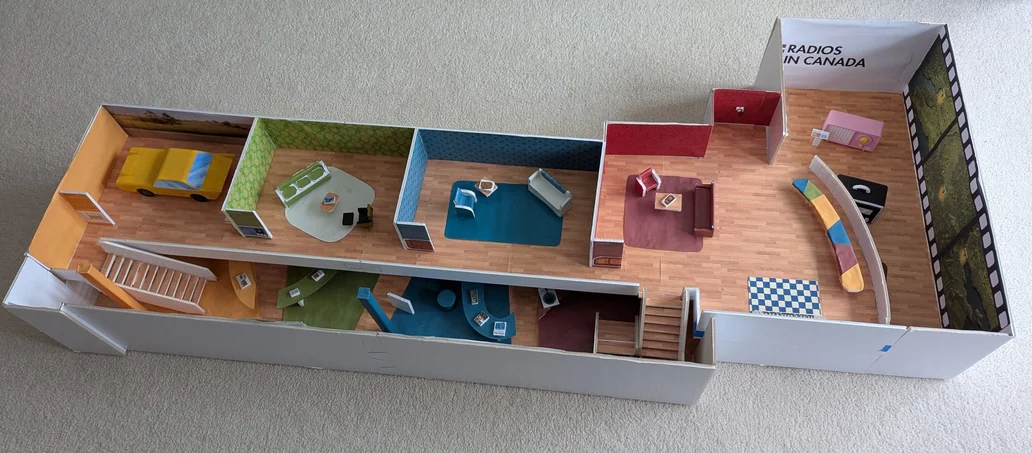
Both levels stacked — main floor below, mezzanine above
The Making
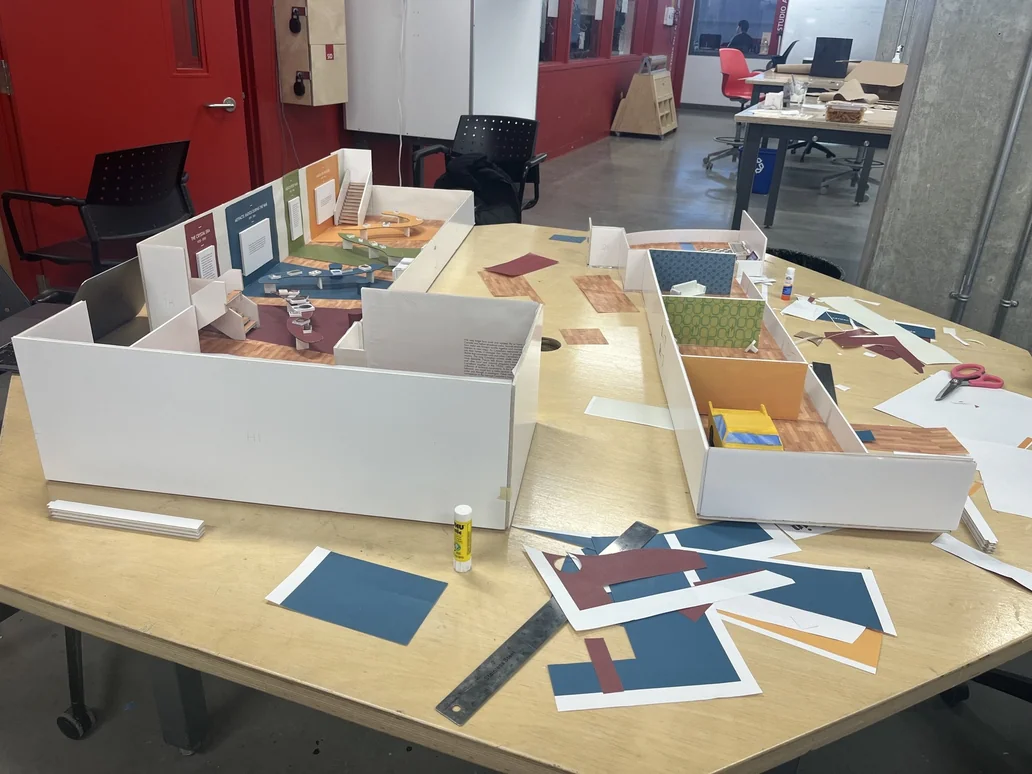
Model mid-assembly in the studio
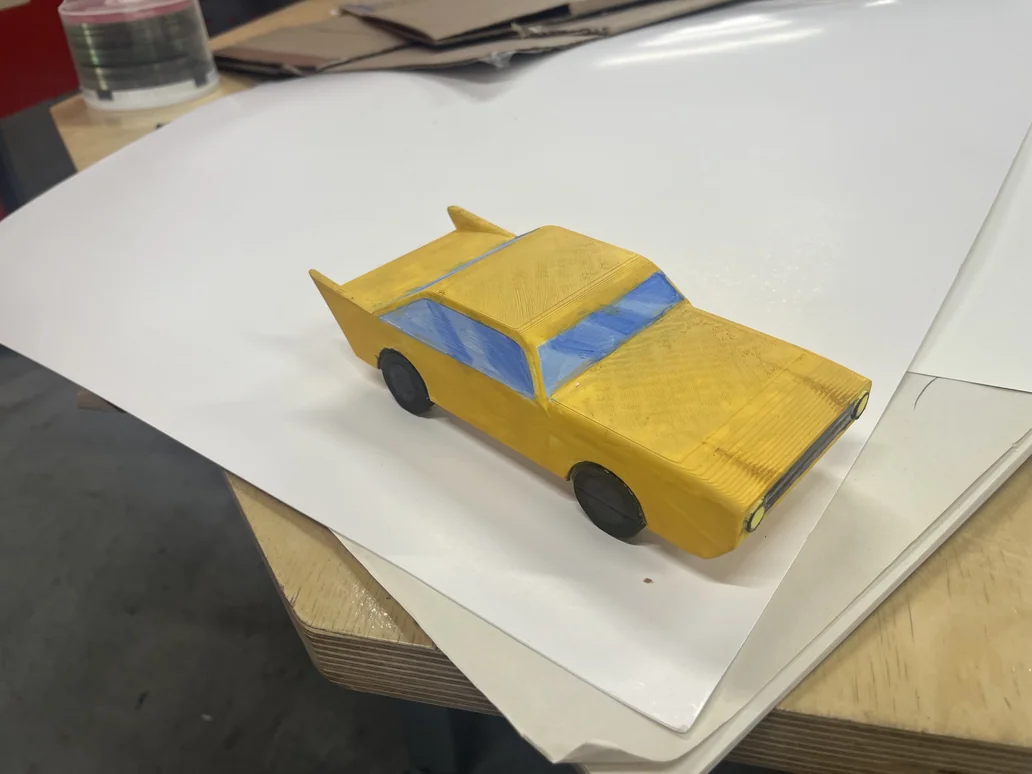
3D-printed and hand-painted car prop for the Radios on the Move era
Furniture
Main Floor Furniture
Period Room Furnishings
Each mezzanine room is furnished to its era — from the wood-and-leather chairs of the 1920s Crystal Era living room to the green mid-century sofa and a parked Cadillac in the 1959–1961 room, evoking car radio culture.
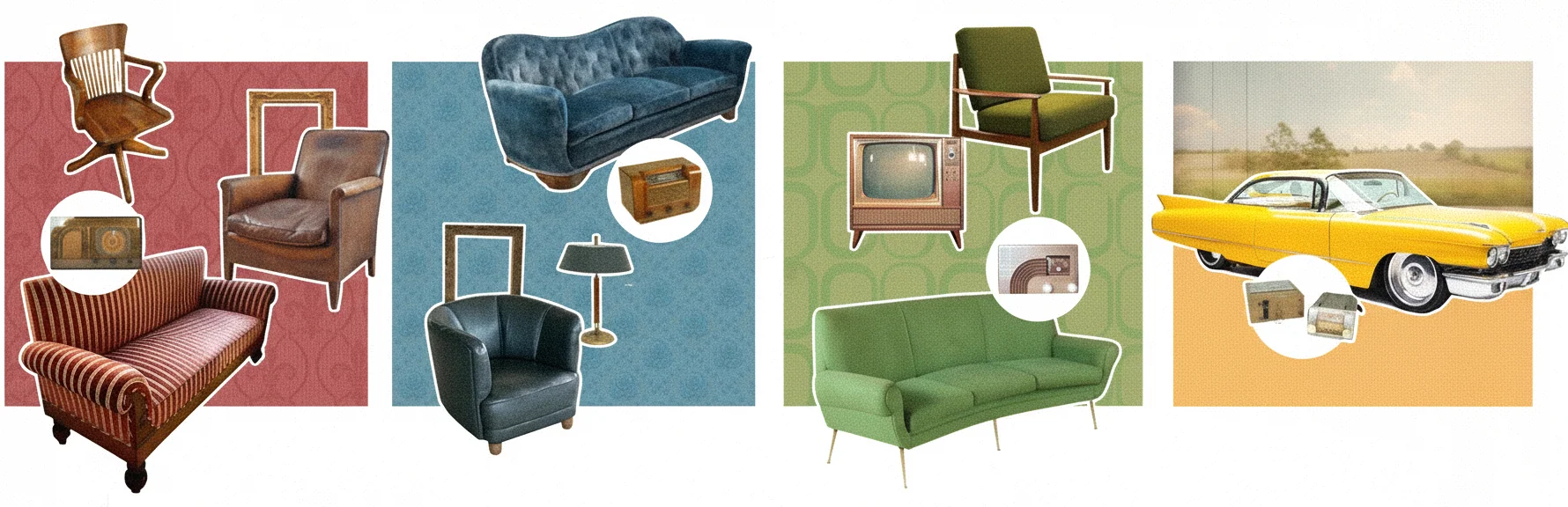
Furnishing moodboards — 1920–1930, 1939–1945, 1950–1960, 1959–1961
Interactives
Five Stations
Each era has an interactive designed to draw visitors into the content rather than just present it — building from hands-on tinkering to full-body immersion.
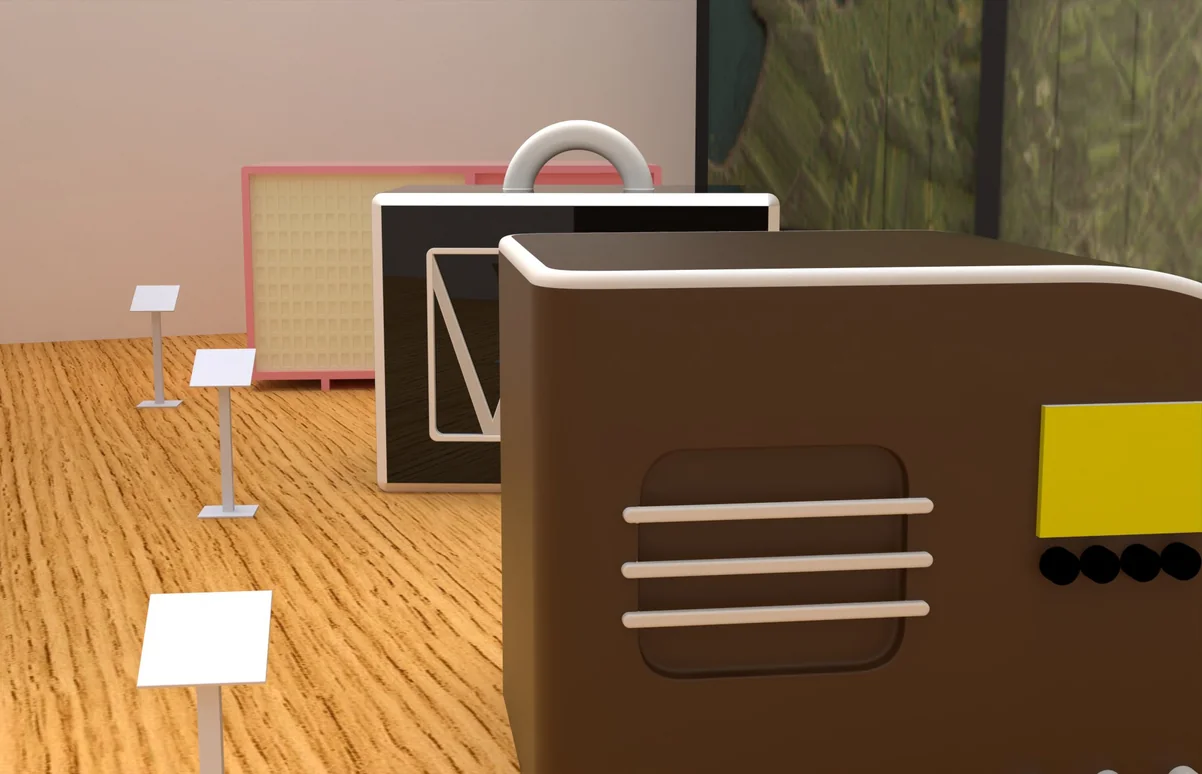
High Gallery
Giant Interactive Radios
Three oversized radios with functional turning dials sit in front of a large topographic map of Canada. Each dial switches the broadcast playing and illuminates the location where it was originally aired — making the exhibition's central idea tangible: radio as a connector of people across a vast country.
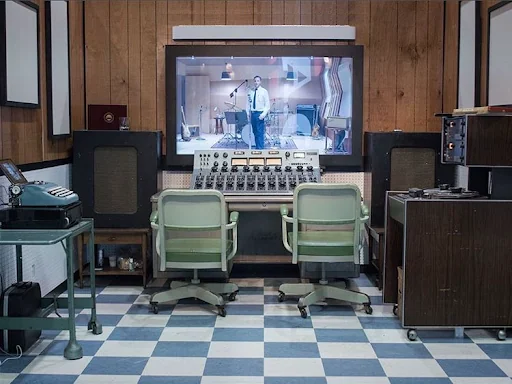
Final Interactive
Radio Recording Booth
A full-scale replica recording booth closes the exhibition. Visitors step inside to operate studio equipment, while a listening area just outside lets others hear what's happening in the booth — putting the connection theme of the whole exhibition into direct, live experience.
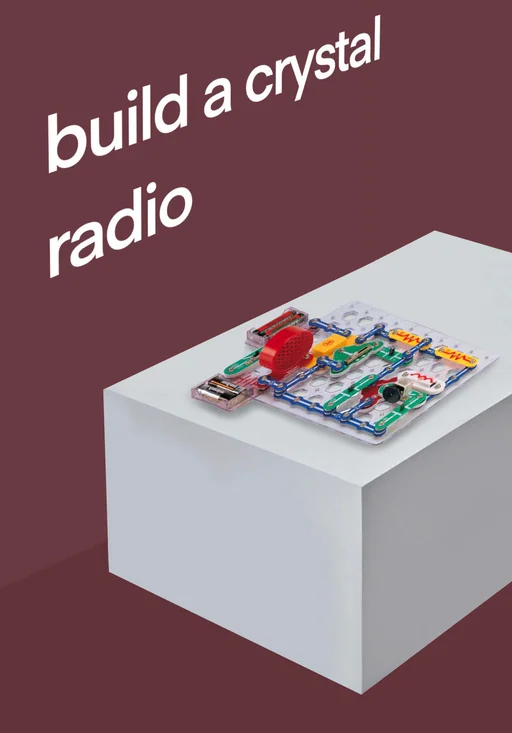
The Crystal Era — 1920–1930
Build a Crystal Radio
A circuit-building puzzle where visitors assemble a working crystal radio — mirroring the tinkering culture that gave early Canadian radio its start.
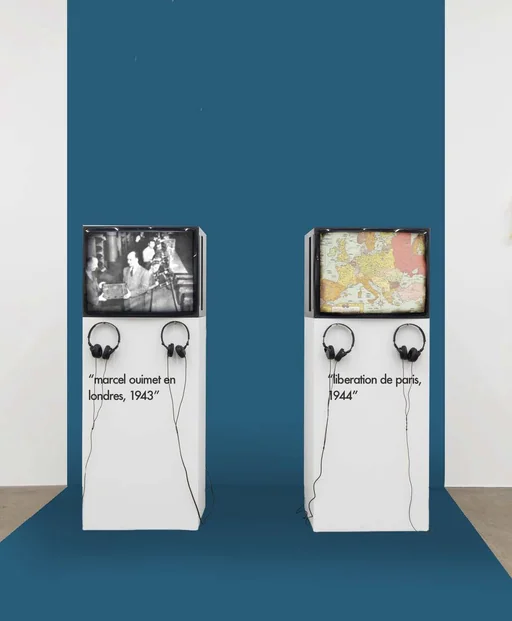
Radios During the War — 1939–1945
Broadcast Listening Stations
Real 1940s broadcasts — including Marcel Ouimet en Londres (1943) and the Liberation de Paris (1944) — paired with archival slideshow visuals, heard through headphones at freestanding pedestals.
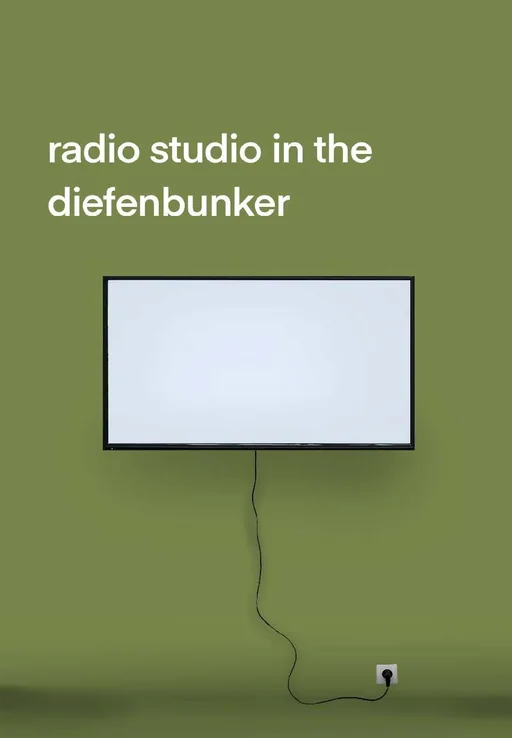
Radios Post-War — 1950–1960
The Diefenbunker Studio
A video installation documenting the intricate radio studio inside Canada's Cold War bunker — giving visitors a close-up look at broadcasting infrastructure they would never otherwise see.
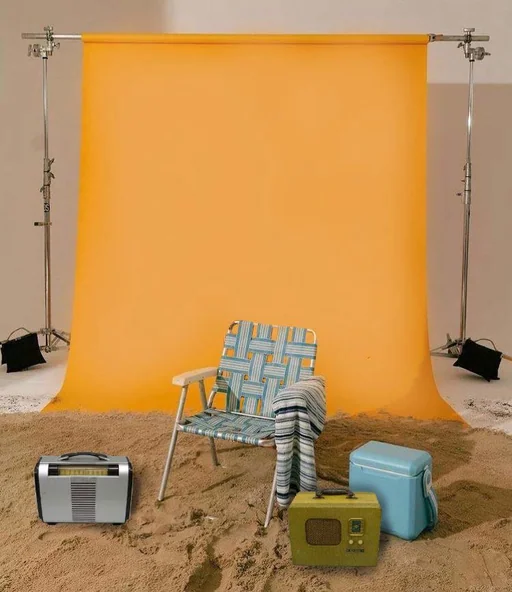
Radios on the Move — 1959–1961
Beach Photo Booth
Visitors pose with portable radios against a golden sandy backdrop, transporting them to the late-1950s beach culture that made transistor radios ubiquitous.
Visual Identity
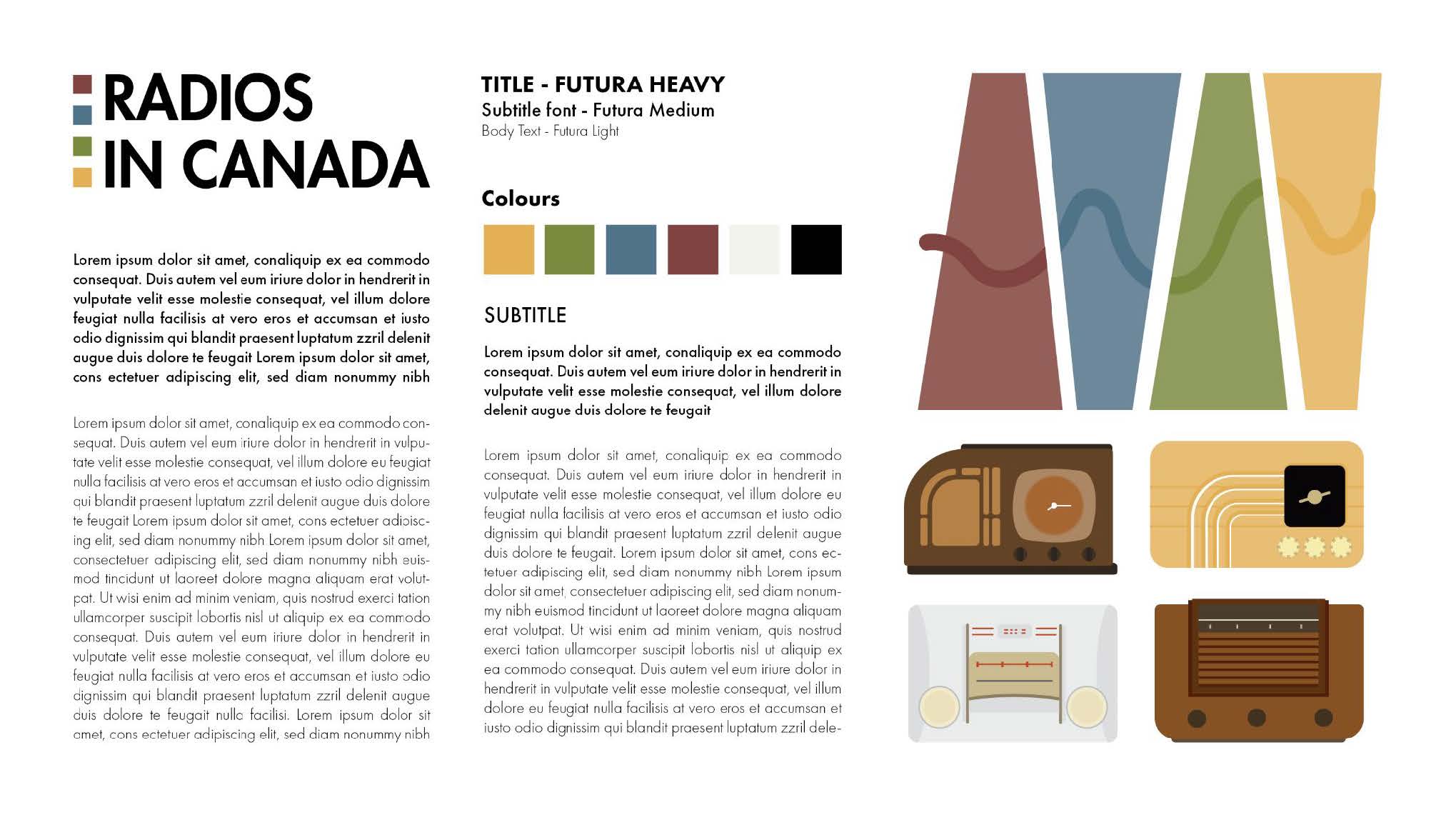
Colour Palette
Gallery Posters
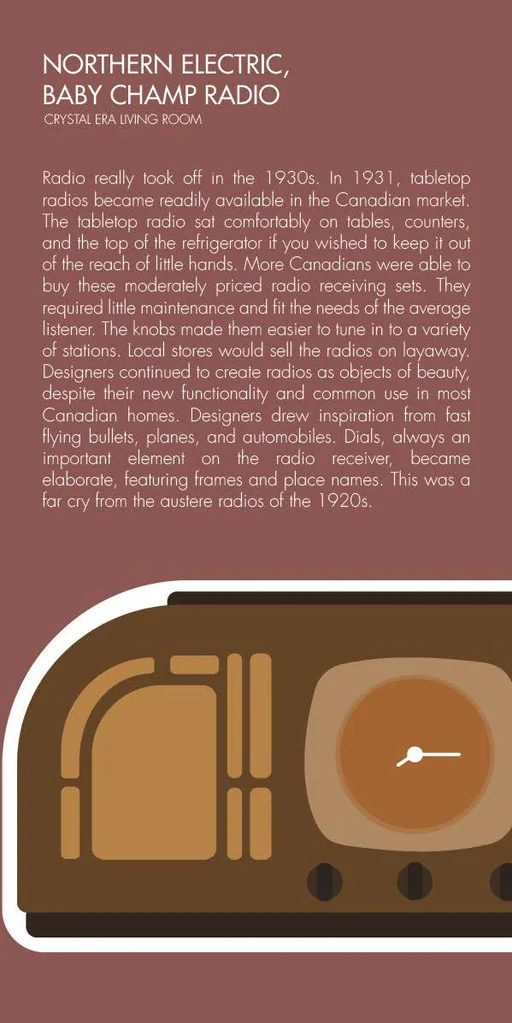
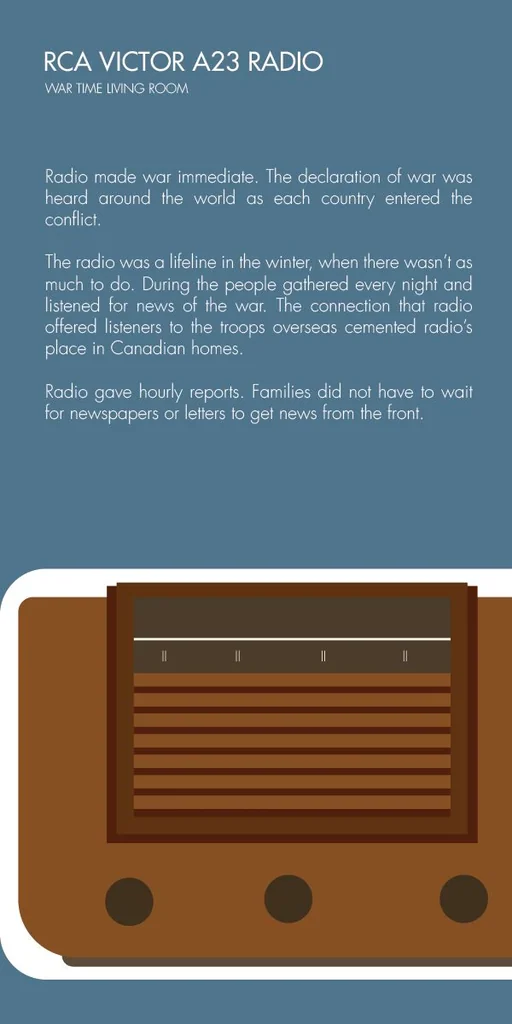
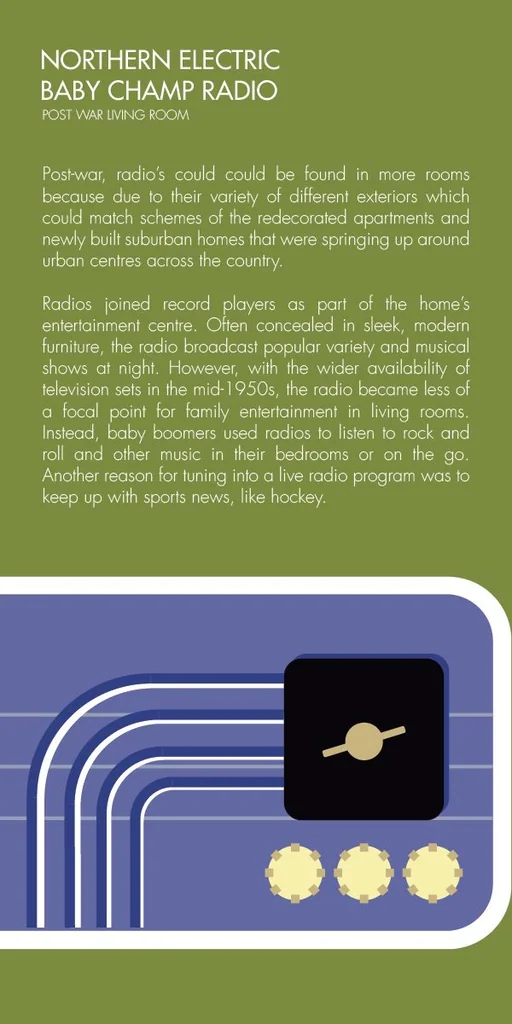
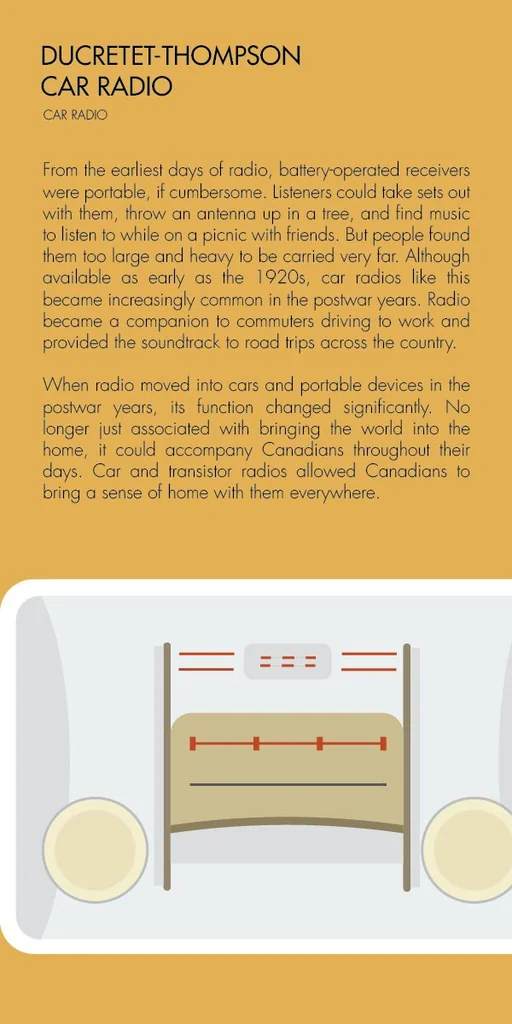
Each era's mezzanine room is anchored by a tall poster panel — set in Futura, using the era's colour — that names the radio on display, gives its year, and explains its place in Canadian domestic history. The same four colours thread through flooring, furniture, and wall panels on both levels.
Style Guide