
SolarLink
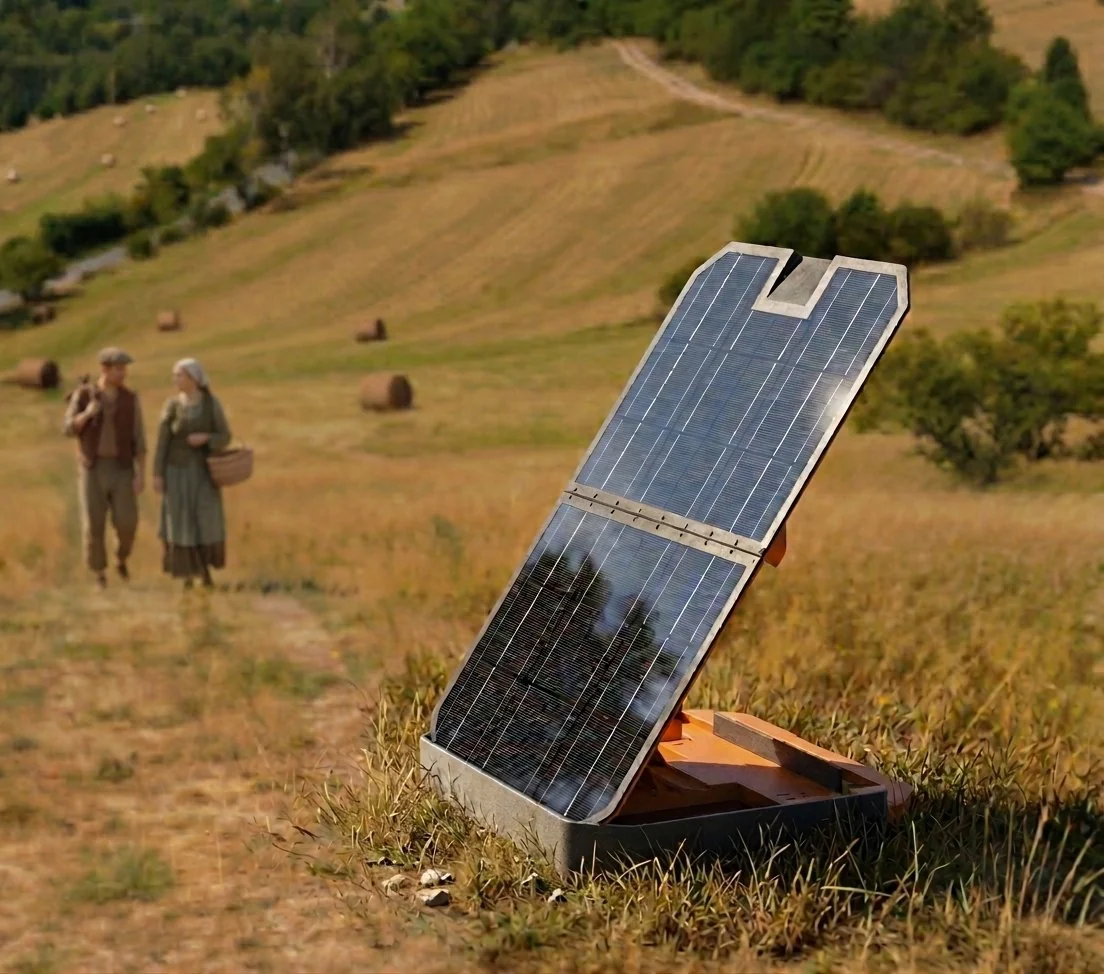
A portable solar panel for off-the-grid agricultural communities — easy to carry, quick to deploy, and adjustable to capture optimal sunlight throughout the day. Designed to improve community productivity in areas lacking reliable power infrastructure, particularly for charging the mobile devices that connect farmers to weather, markets, and each other.
- Problem
- 770 million people lack reliable electricity, cutting off farmers from the mobile tools that connect them to weather, markets, and each other
- Materials
- Anodized aluminum frame, tempered-glass laminated solar cells, stainless steel hinges, UV-stable TPU latch, glass-fiber reinforced polypropylene handle, neoprene impact casing, internal MPPT controller and battery
- Key Features
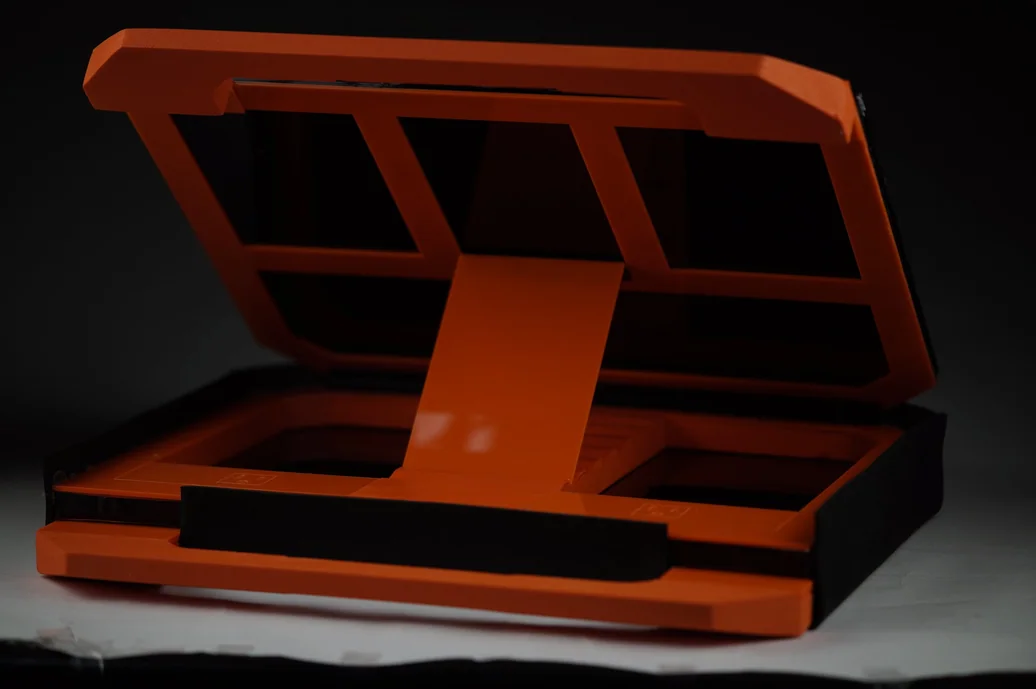
- Staircase angle adjustment, split carry handle with latch closure, neoprene impact casing, AC outlet + USB + USBC outputs
Research
Where could solar make
the biggest difference?
Over 770 million people lack access to electricity. We started by asking not just what solar panels can do, but who needs them most — mapping contexts, constraints, and opportunities as a team before narrowing our focus.
We landed on agricultural communities in the developing world, where a single charged device can connect a farmer to weather forecasts, market prices, and techniques that directly affect their livelihood.
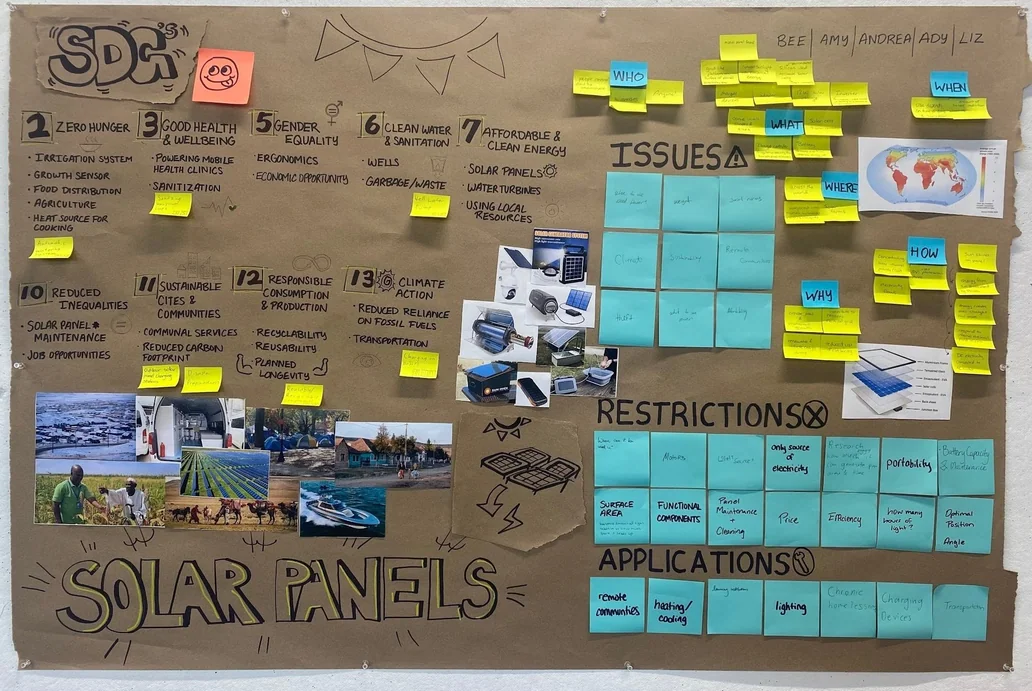
SDG mapping and brainstorming board used to compare solar panel applications across contexts.
No Poverty
In off-grid farming communities, reliable energy isn't a luxury — it's the difference between subsistence and economic participation.
Zero Hunger
Solar-powered irrigation and digital farming tools have a measurable impact on crop yields and food security in low-infrastructure regions.
Affordable and Clean Energy
Portable solar is one of the most viable paths to clean energy access in areas far from grid infrastructure.
Product Analysis
To design for this context, we first understood what we were working with. A FLEXSOLAR 12W panel was physically broken down to examine its components and material layers. We then tested it in three different angled positions — confirming that panel orientation has a greater effect on output than cloud cover alone.
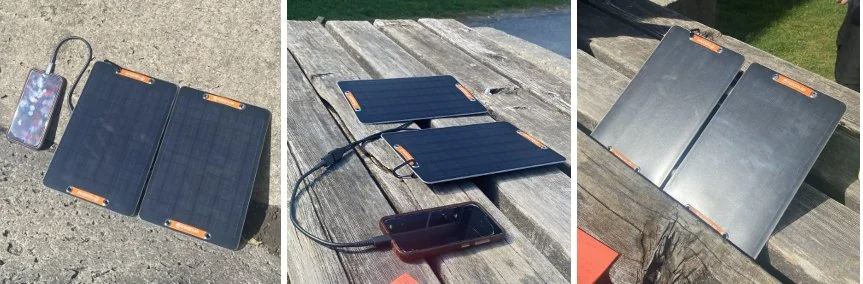
Panel tested in three positions — flat, low angle, and direct-facing — to observe the effect of orientation on charging output.
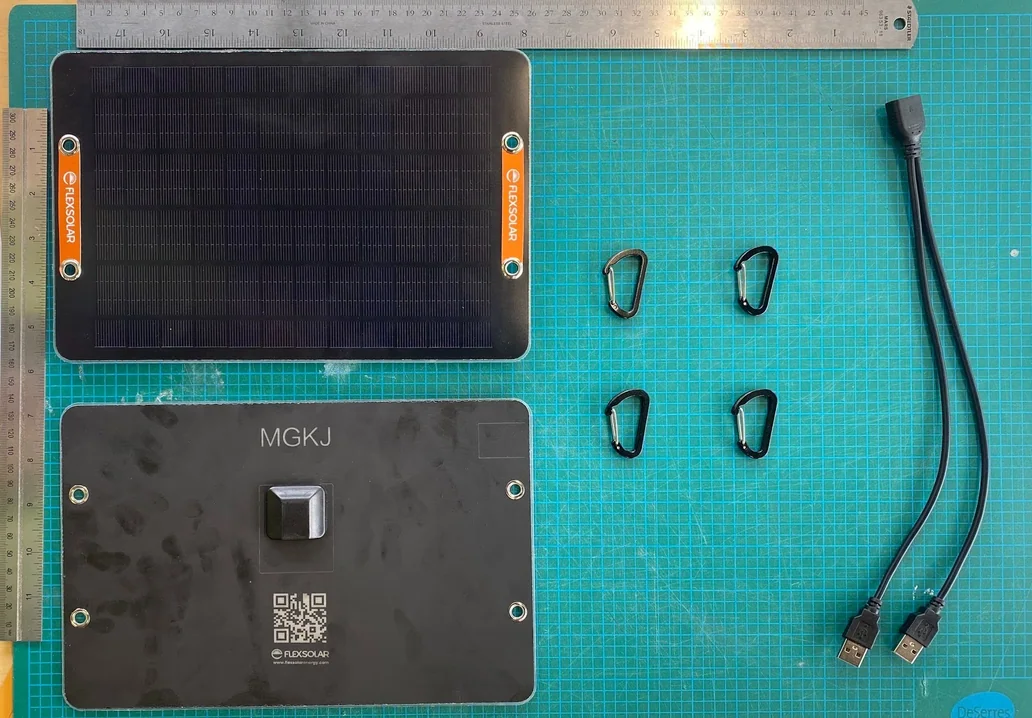
FLEXSOLAR 12W portable solar panel, disassembled and measured.
Ideation
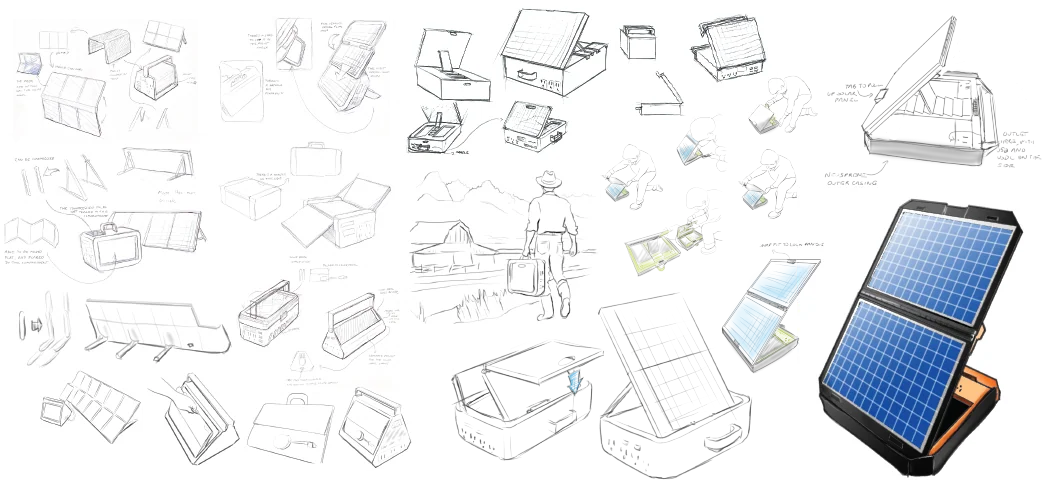
From sketch to mockup
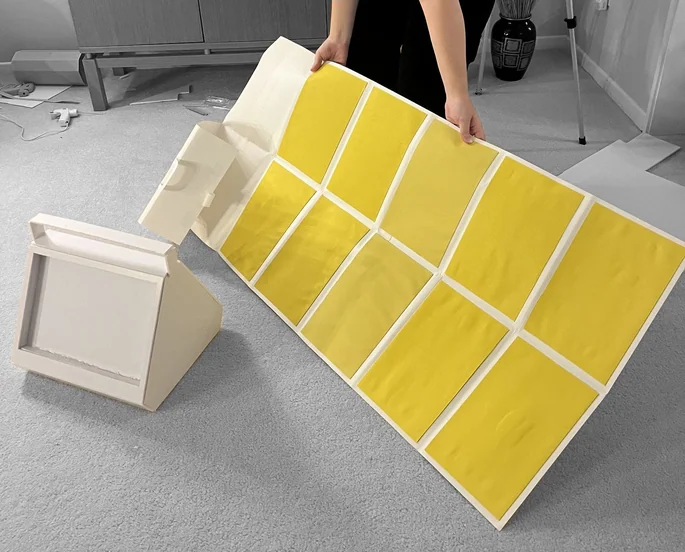
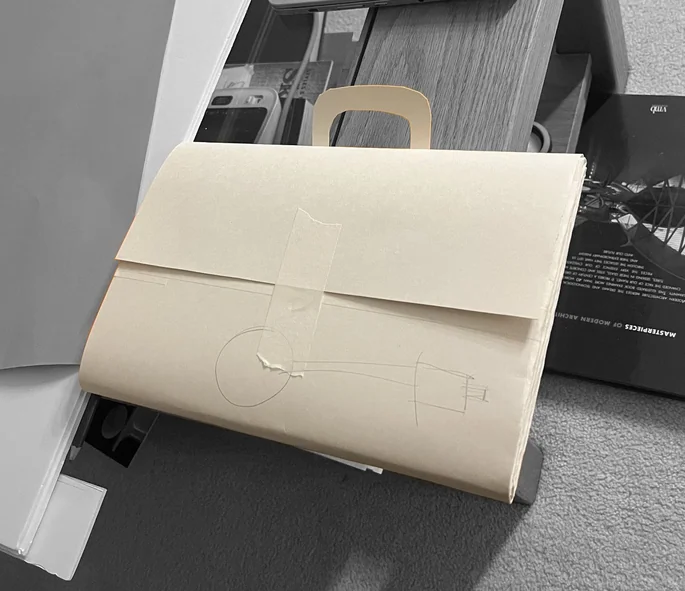
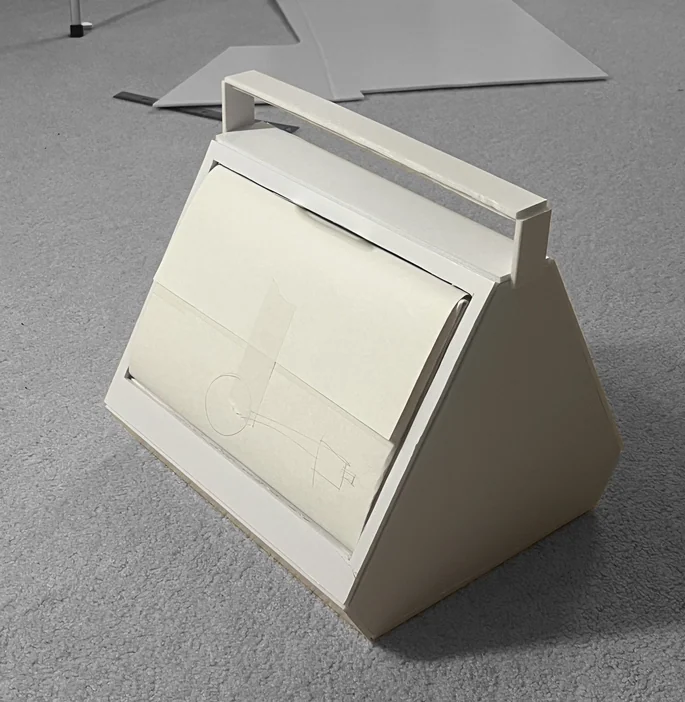
With portability and ease of use as the primary requirements, ideation explored a wide range of folding, hinging, and carrying configurations. After multiple sketch iterations and physical mockups, the design converged on a compact briefcase-like form that opens to reveal and prop the panel.
Early cardboard and foam mockups helped test the basic opening mechanism and the proportions of the panel relative to the base unit.
Initial Mockup
User Testing
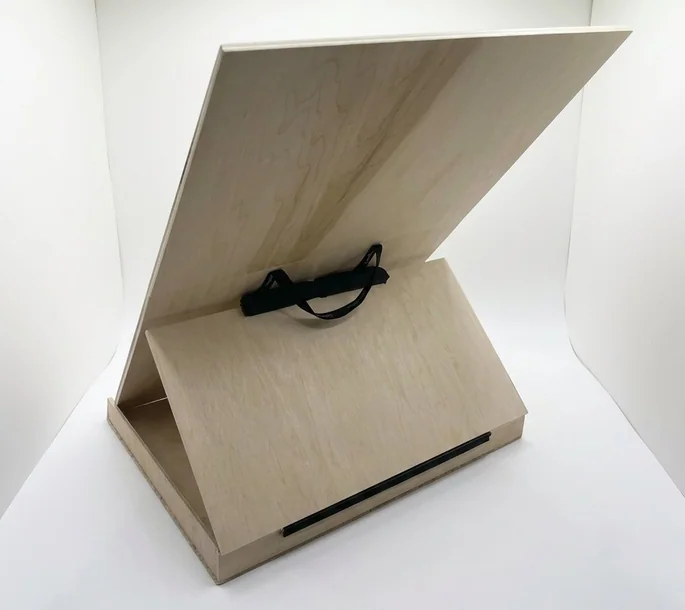
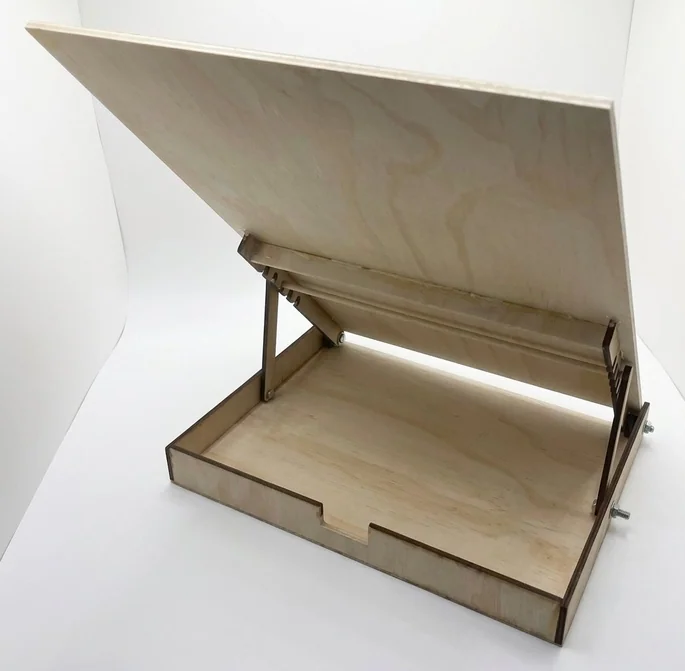
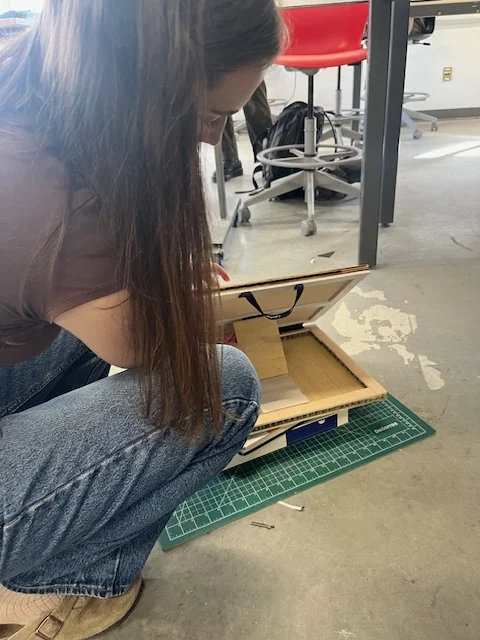
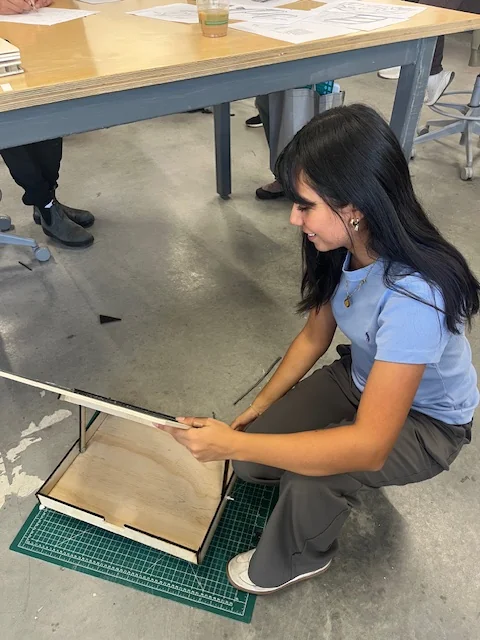
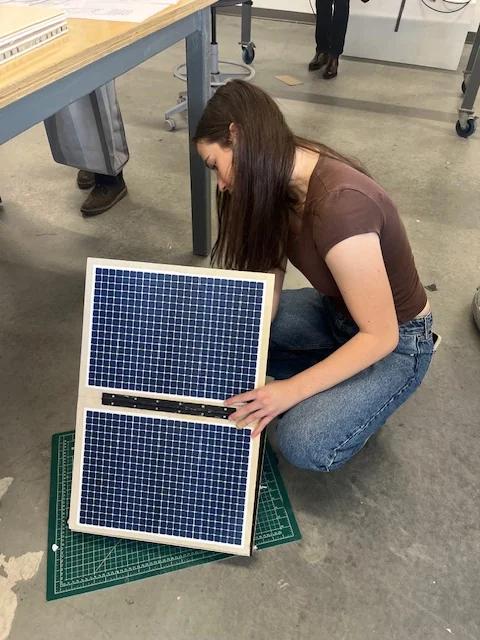
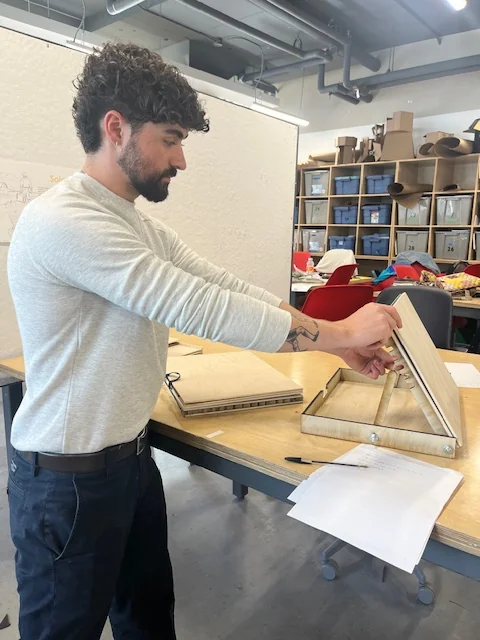
Testing three hinge mechanisms
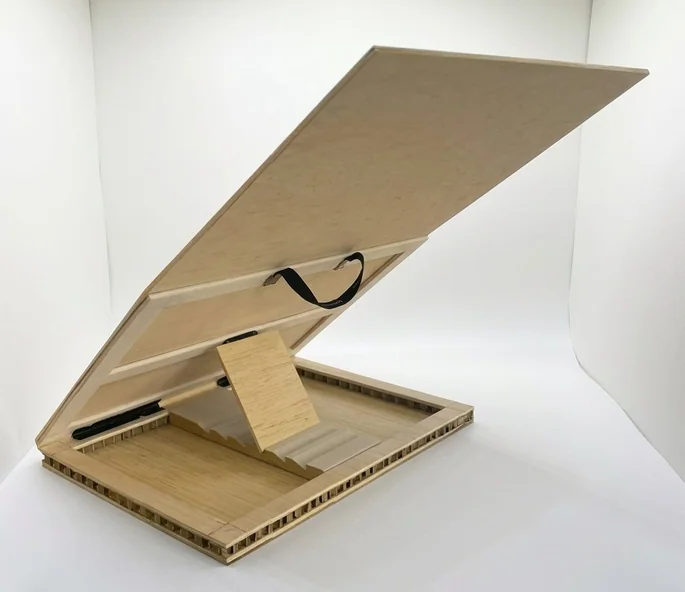
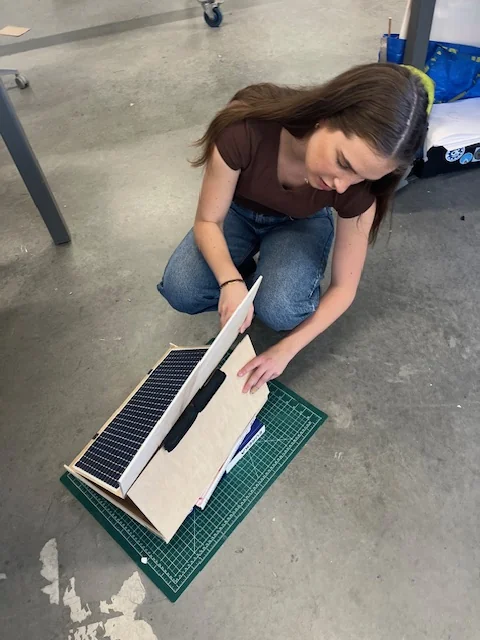
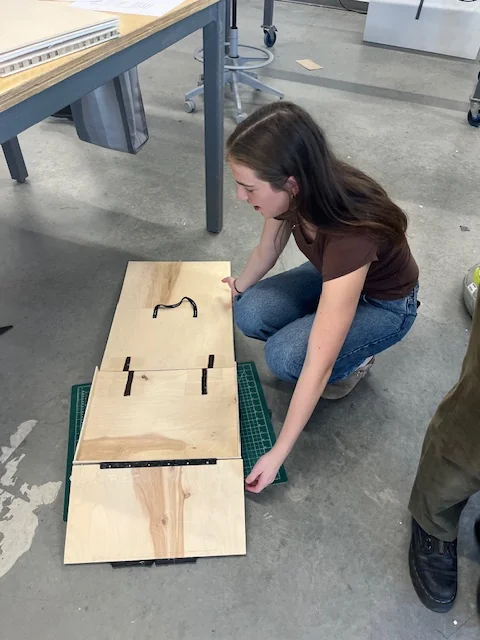
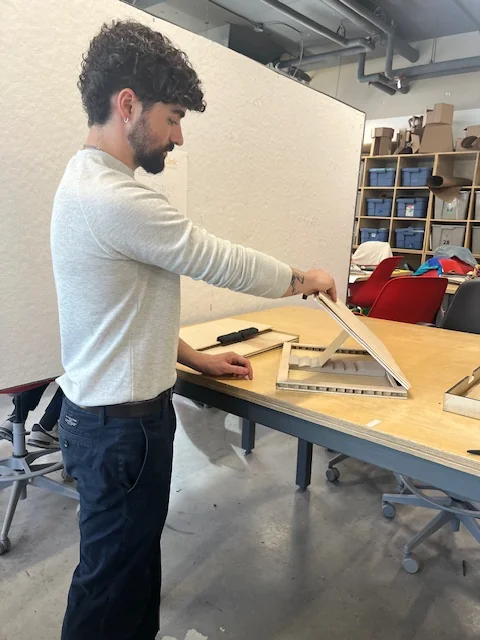
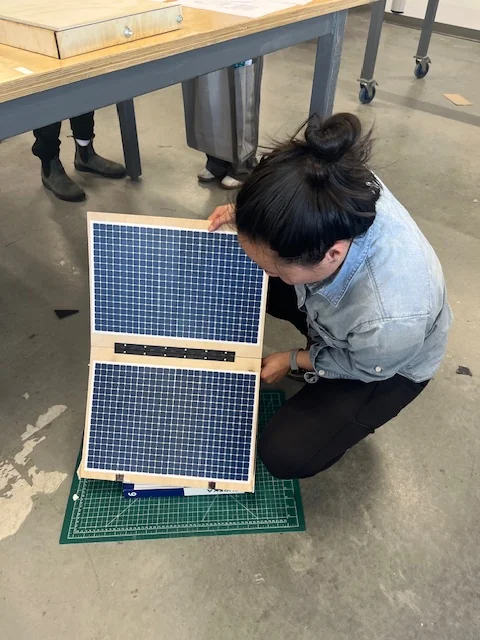
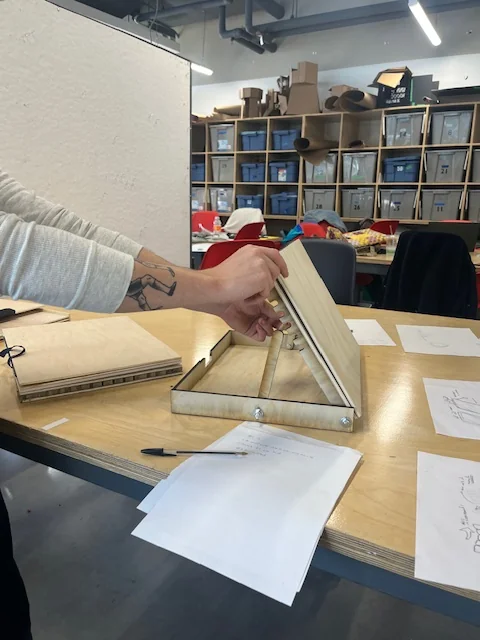
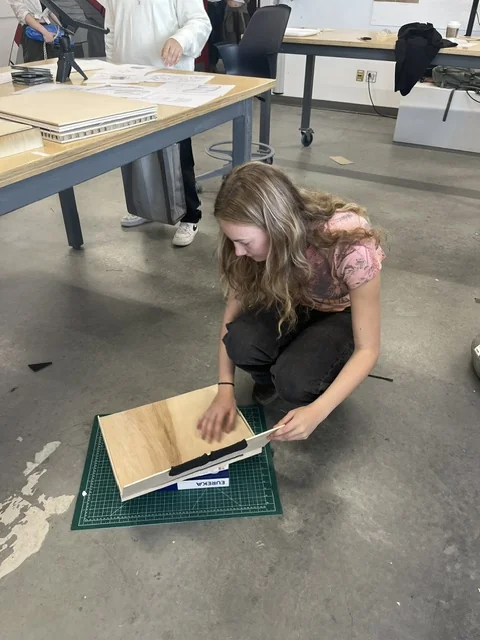
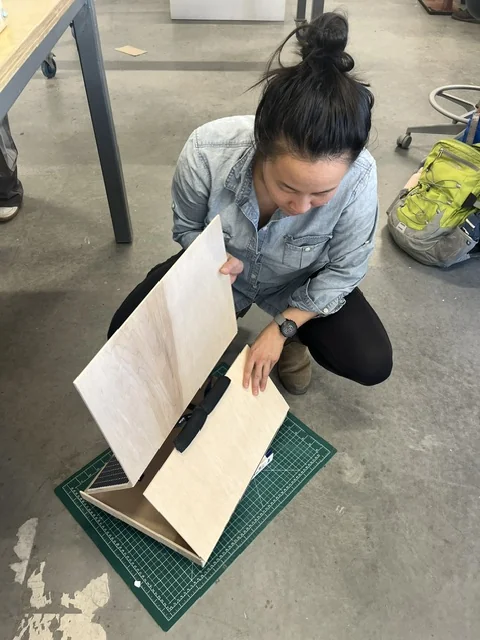
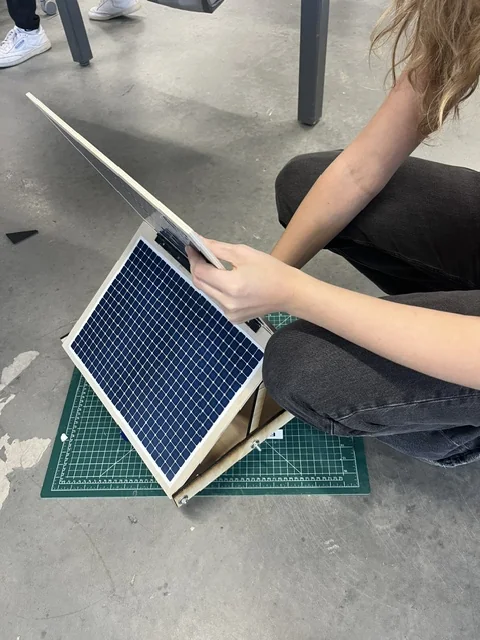
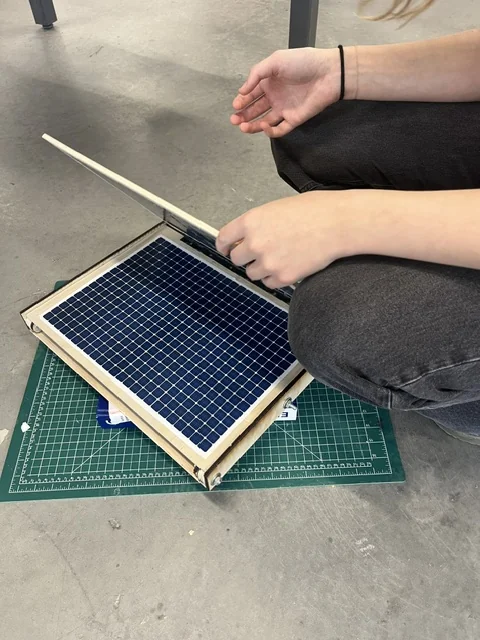
Three models were built to test different hinging and angle-adjustment approaches. User testing focused on how intuitively people could deploy the panel, adjust its angle, and fold it back for transport.
 1
Staircase angle adjustment
1
Staircase angle adjustment
 2
Friction-fit angle adjustment
2
Friction-fit angle adjustment
 3
Groove angle adjustment
3
Groove angle adjustment
Feedback consistently pointed toward the need for more defined angle positions — leading to the staircase mechanism in the final design — and a handle that could multitask: carrying the unit and adjusting the prop angle without requiring a separate component.
Final Design

Compact, rugged, and self-contained
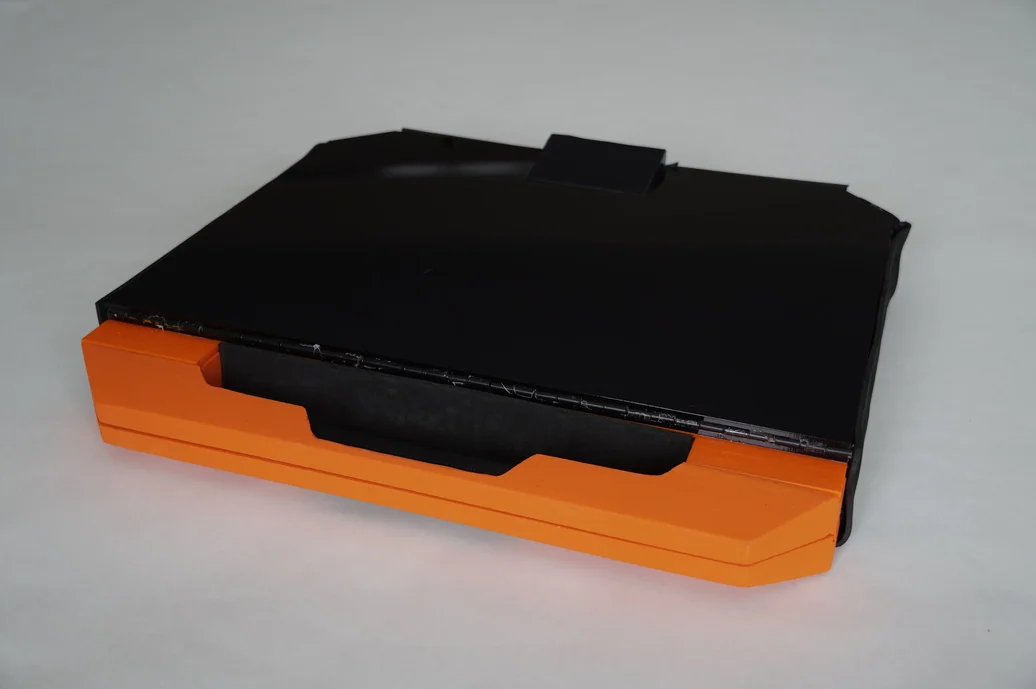
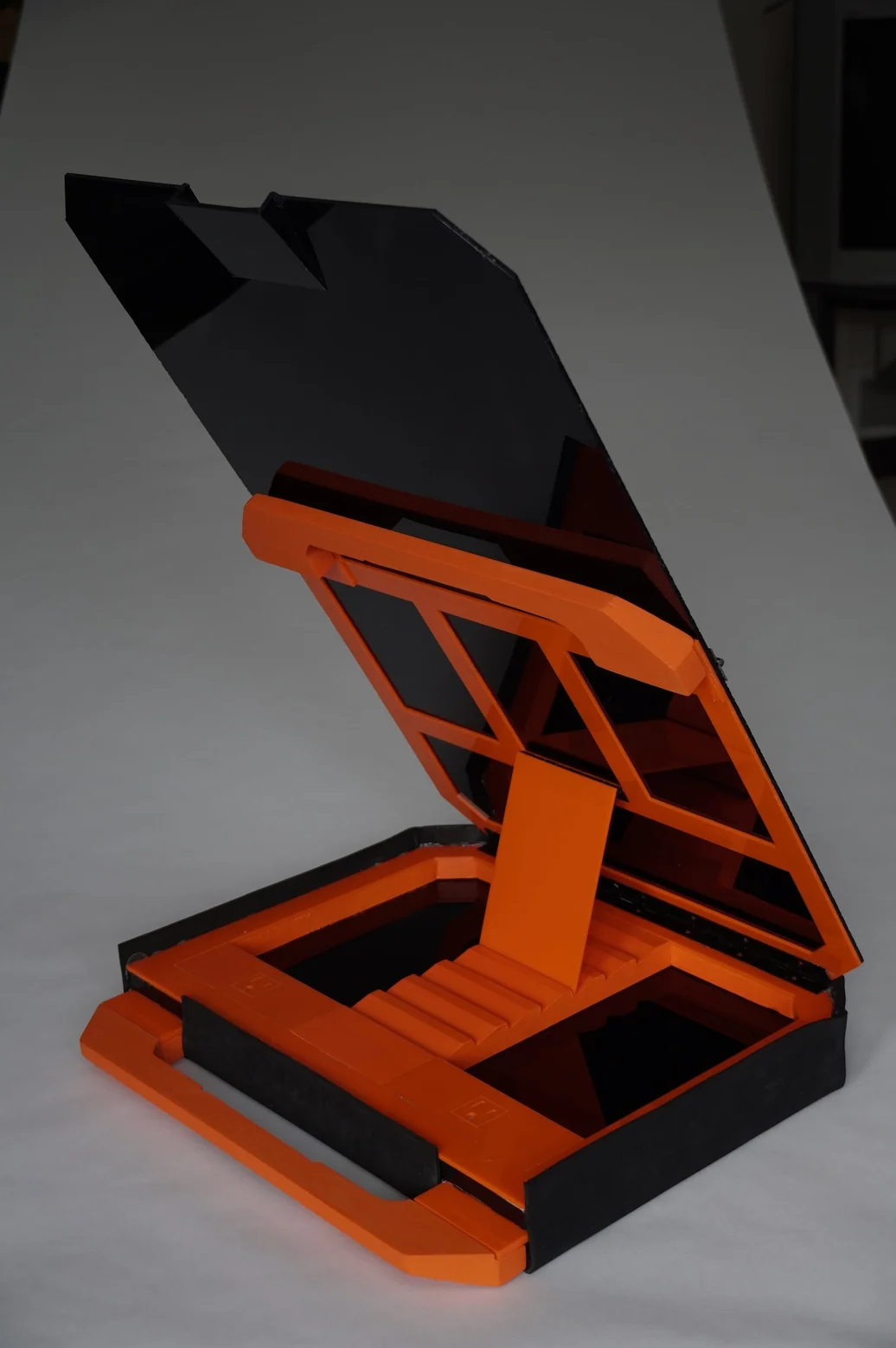
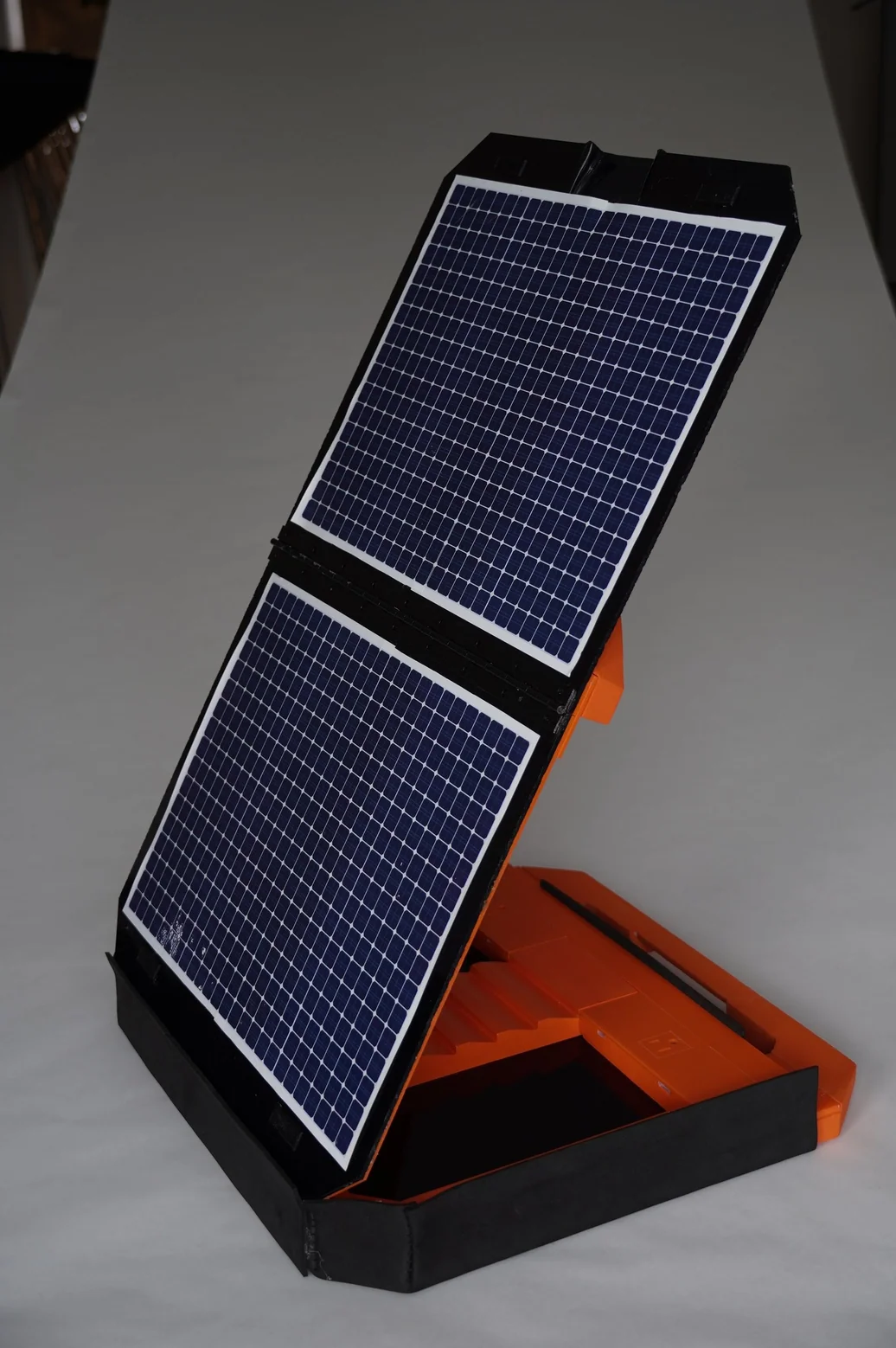
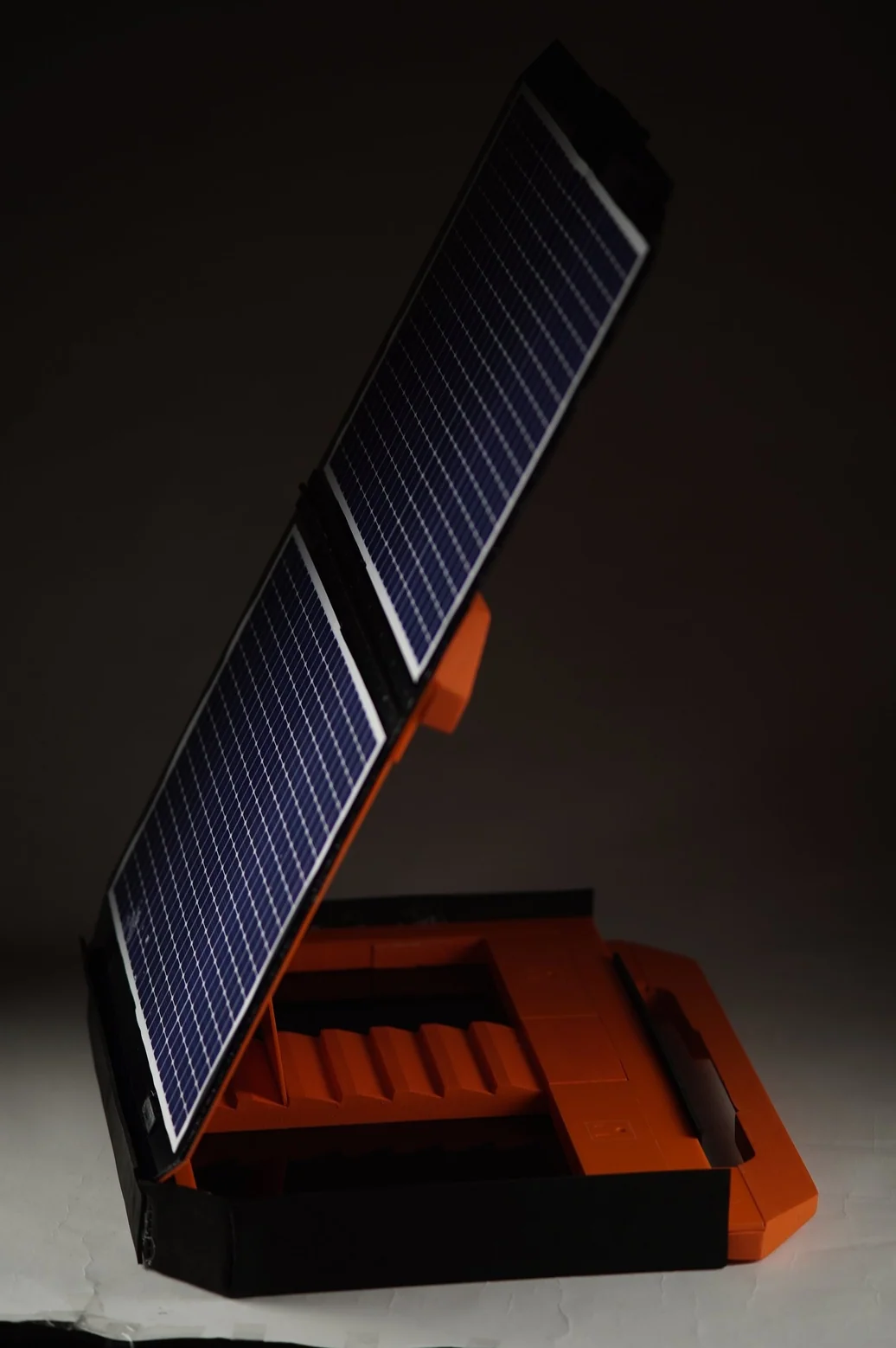
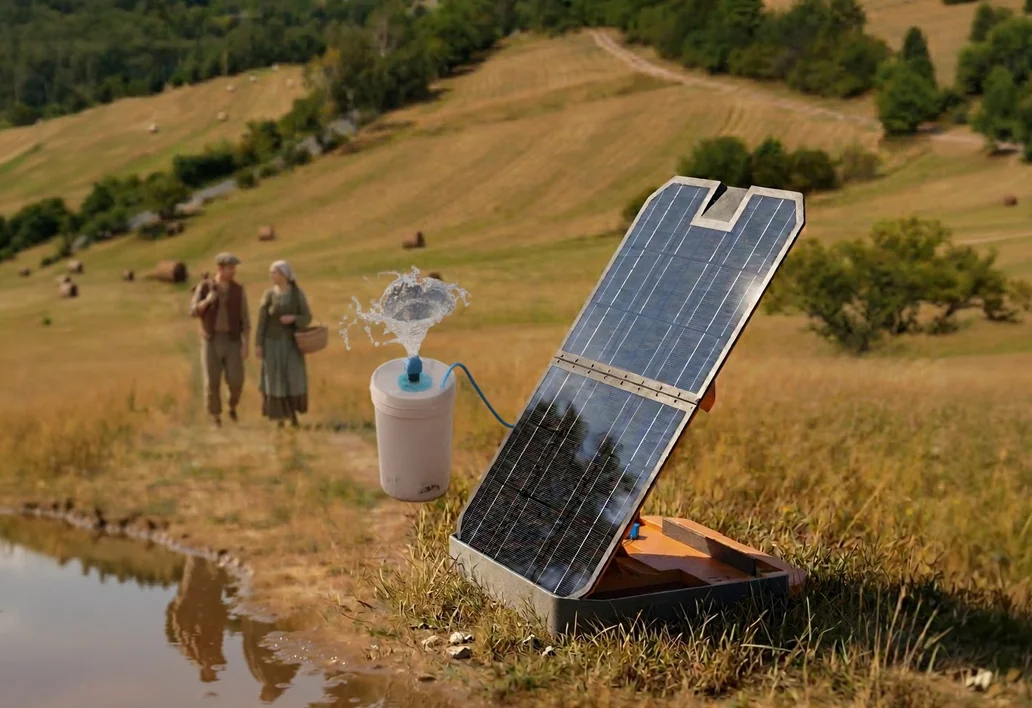
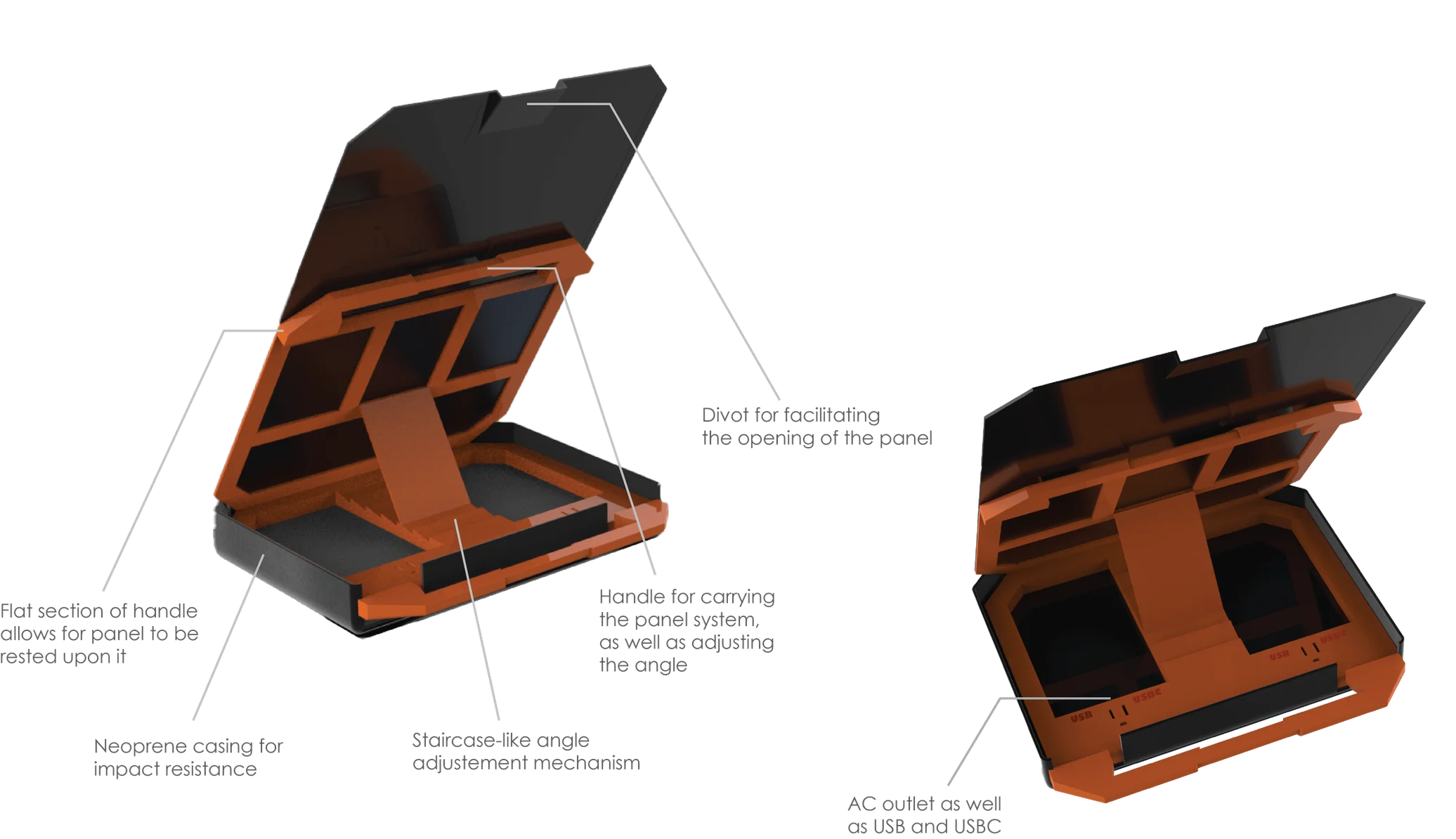
The final design is a self-contained unit: the panel folds flat into a neoprene-cased base that protects the electronics and battery in transit. A staircase mechanism inside allows the panel to be propped at multiple angles without any separate parts.
The handle's two rigid halves are fixed to the body and held together by a flexible TPU latch — releasing it splits the handle apart. Power outputs — AC, USB, and USBC — are housed in the base, accessible whether the panel is open or closed.
Components & Materials
Structural
Frame
Anodized aluminum, built to handle years outdoors without corroding.
Handle & Latch
Glass-fiber reinforced polypropylene handle split by a flexible TPU latch — release it to open the case.
Base Housing
Neoprene casing wraps the base, protecting the electronics and battery from knocks in transit.
Electronics
Solar Panel
Tempered-glass laminated monocrystalline cells — the surface that converts sunlight into power.
MPPT Controller
Regulates the panel's fluctuating output into a steady, efficient charge.
Battery
A LiFePO4 cell stores charge so devices can still be powered after dark.
Power Outlets
AC, USB, and USB-C outputs, accessible whether the panel is open or closed.
Use Cycle

Take to wherever power is needed
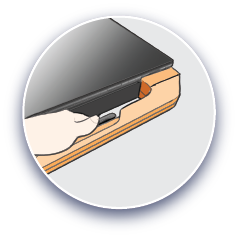
Release the handle latch
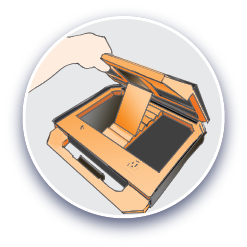
Snap open the solar panel
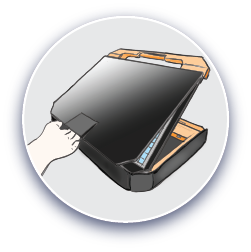
Adjust angle
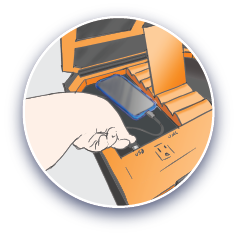
Plug in your device
Final Prototype Process
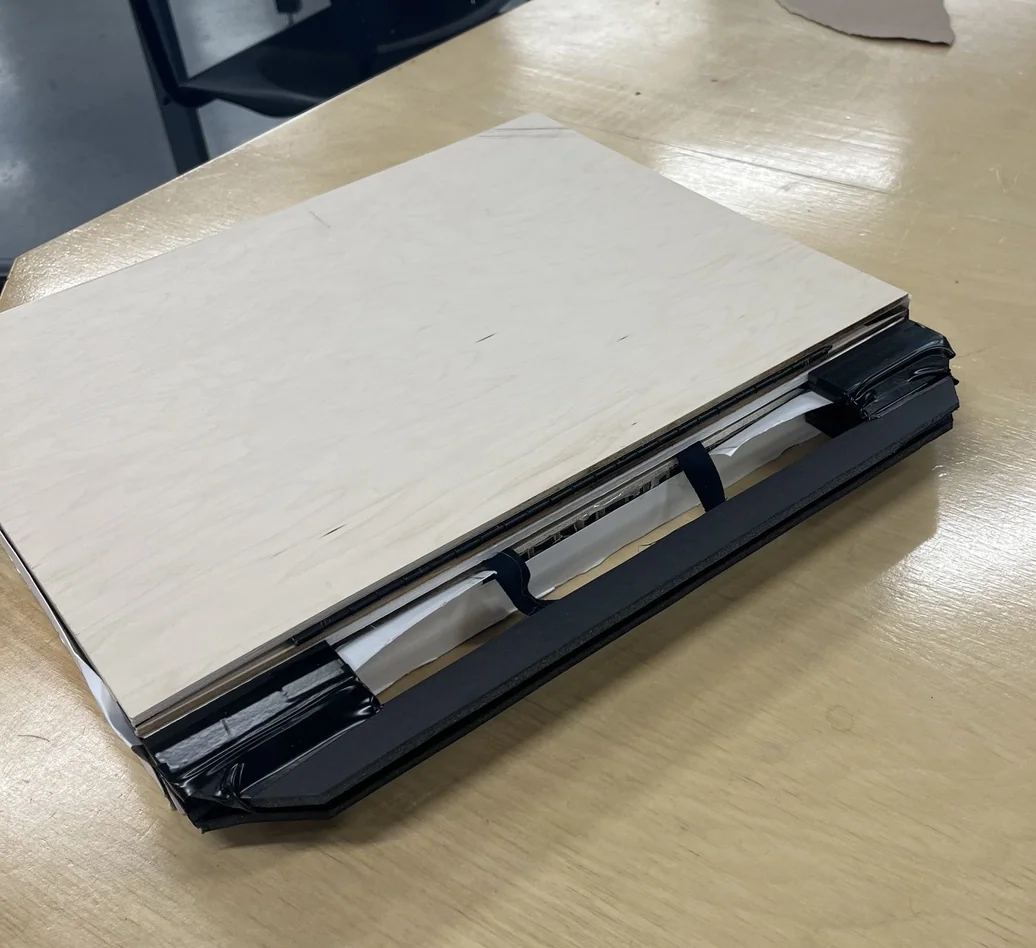 Early volumetric mockup
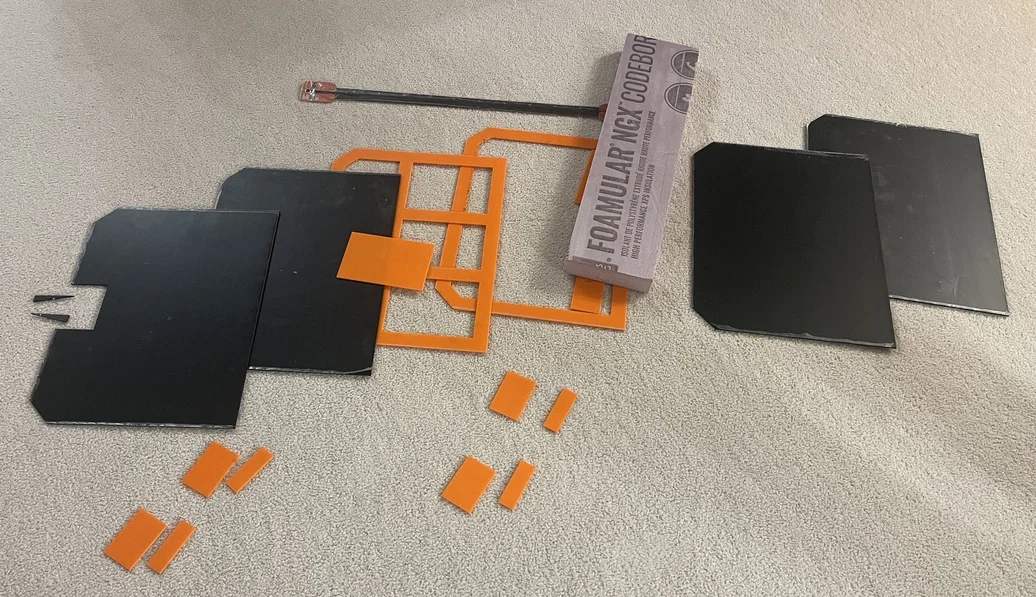 Prototyping materials
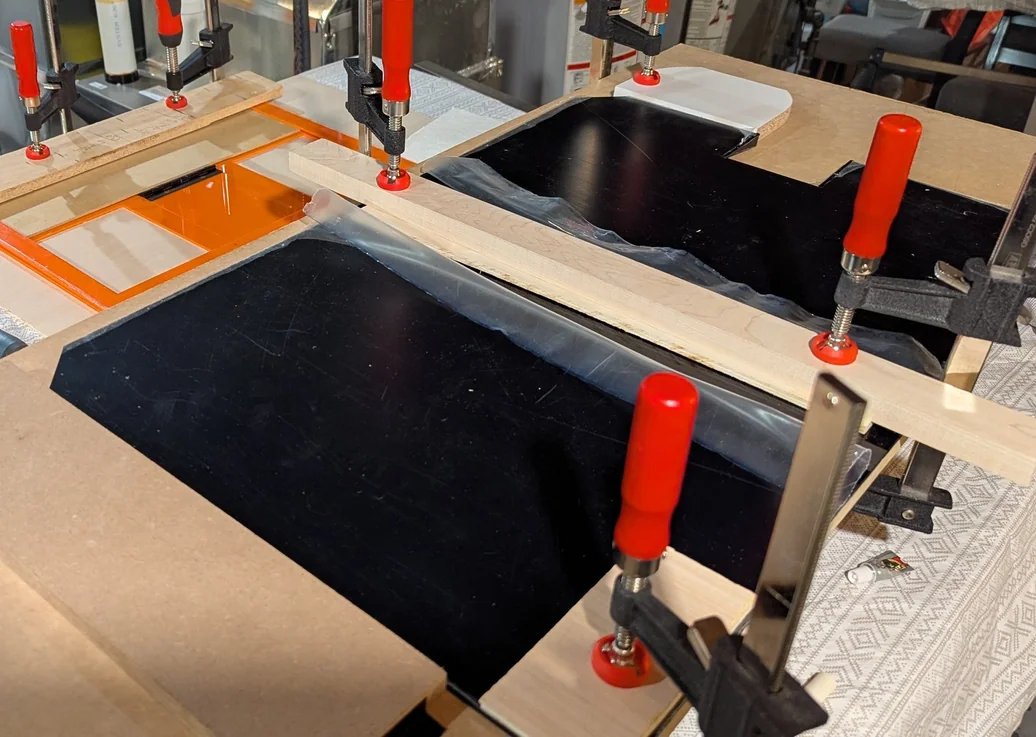
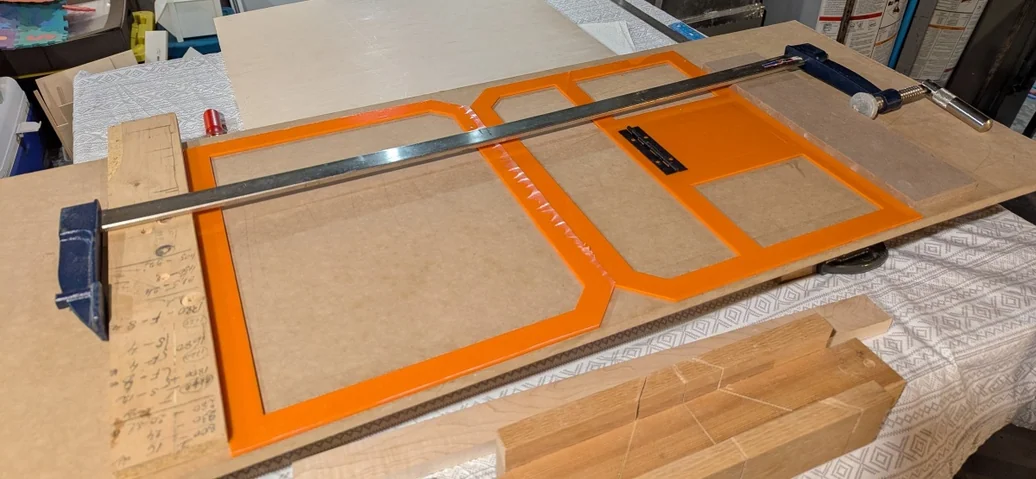
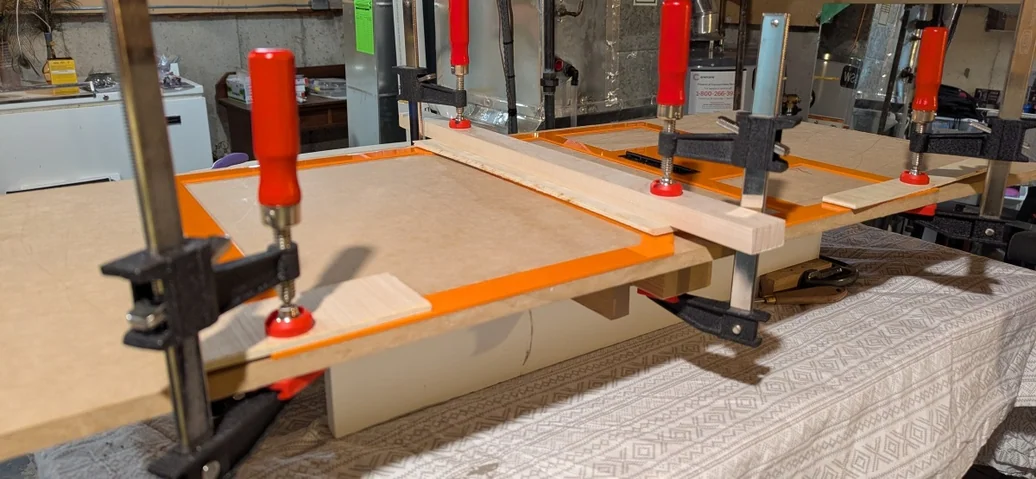 Gluing the hinge
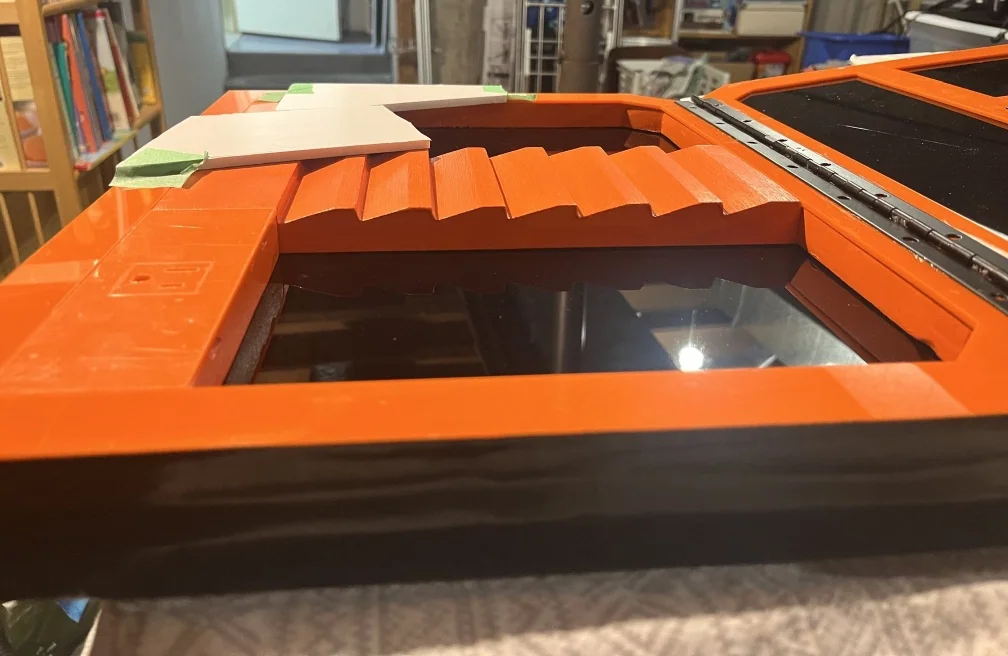 Staircase mechanism assembly
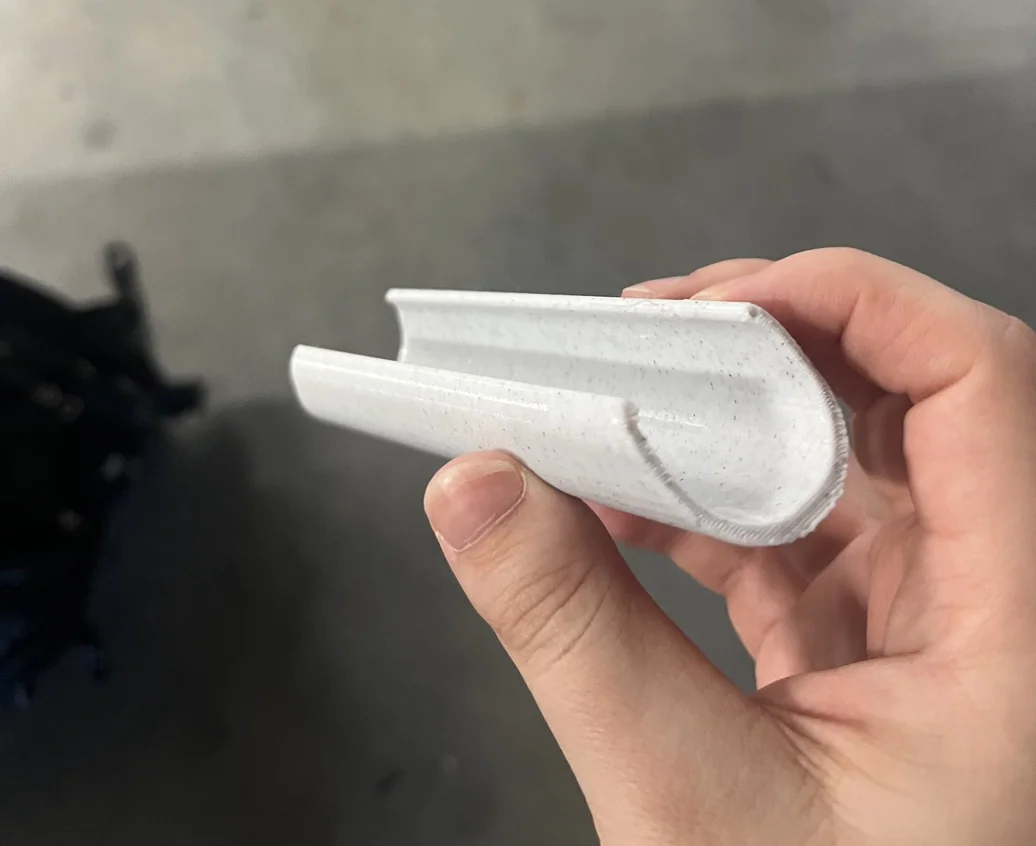 Test-printing the latch
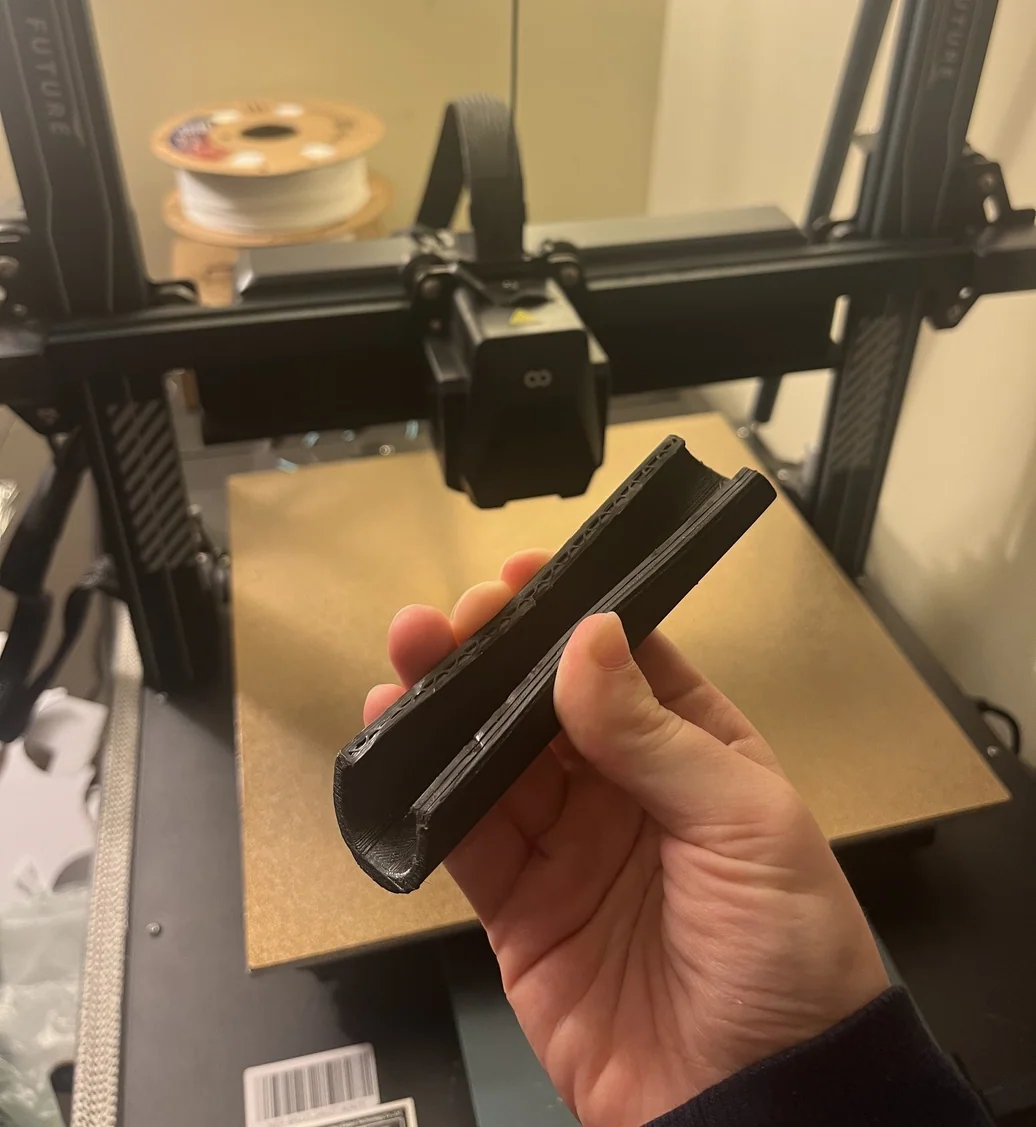 Flexible TPU latch
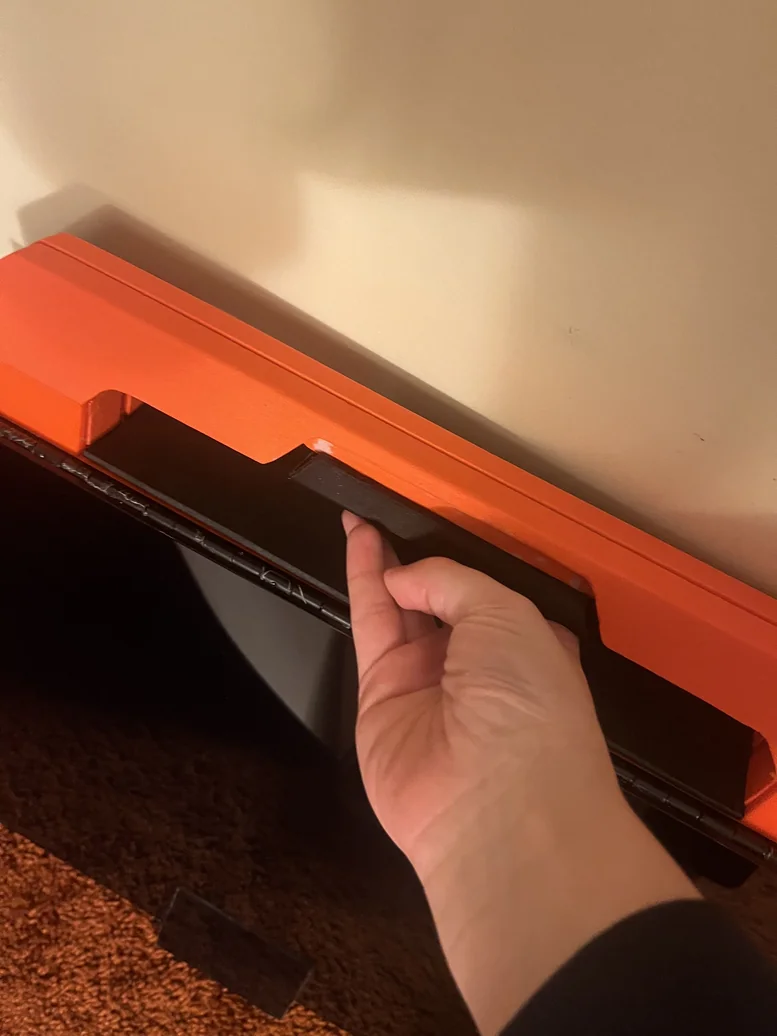 Final test-fit
Final Prototype Photos